Bromo and Ijen in Java: how to get to the island's main volcanoes
By Anna Skumina
04.06.2026
The island of Java is famous for its mesmerizing landscapes, vibrant culture and, of course, impressive volcanoes. Among them are Bromo and Ijen, which stand out as iconic places for active travelers in search of adventure and natural oases. Everything about a trip to Bromo and Ijen is in our article.

Depositphotos
Mount Bromo, rising 2,329 meters above sea level, is one of the most active volcanoes in the Tengger massif, which is part of Bromo-Tengger-Semeru National Park. Its name comes from Brahma, the Hindu god of creation, which reflects the deep cultural and religious roots of the region.
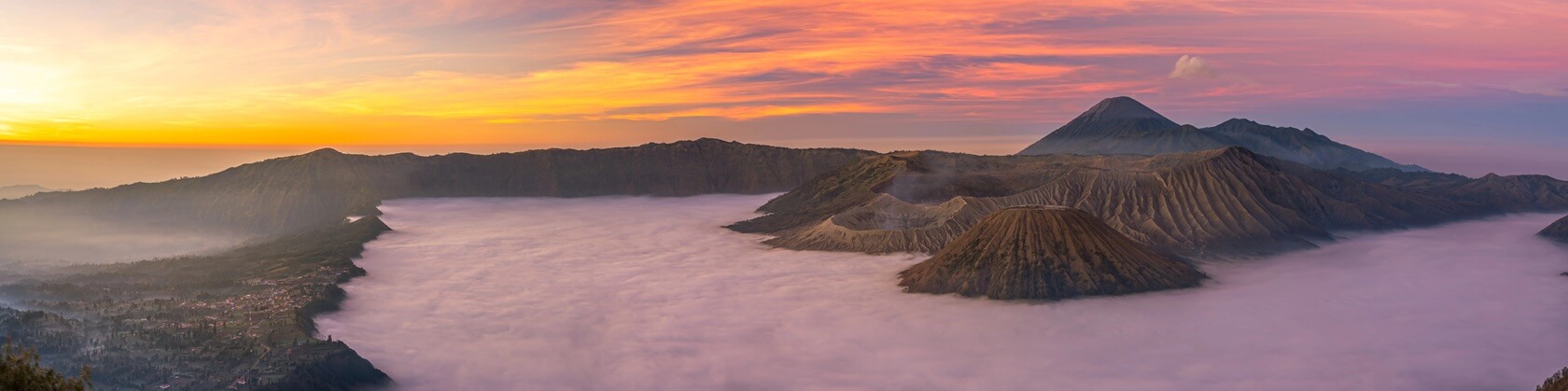
The Tengger caldera is a huge otherworldly expanse covered with fine volcanic sand. There are five volcanoes inside the caldera, and the most active of them is Bromo. Its frequent eruptions, marked by loud rumbles and columns of ash, shape a unique landscape and contribute to the formation of rich volcanic soil that supports diverse vegetation in the surrounding area.

Depositphotos
Wrapped in legends, Bromo rises not only as a volcano but also as a sacred place, the dwelling of a god. The mountain has great cultural significance for the Tenggerese - the indigenous people of East Java. Every year they celebrate the Yadnya Kasada festival, during which people, despite the danger, throw offerings into the crater: vegetables, livestock and rice, to honor the gods of the mountain. This tradition, rooted deep in the centuries, testifies to the harmonious relationship between the Tenggerese and the nature around them.

Depositphotos
Operators offer a variety of tours lasting from one to several days. Depending on the program, such tours may include visits to the Madakaripura waterfalls, exploring the village of Cemara Lawang and getting acquainted with the way of life of its residents, climbing Mount Semeru, visiting tea plantations, pools, the volcanic observatory, the Kanger hot spring and other equally fascinating locations, and even paragliding on Mount Banyak.
The journey to Mount Bromo usually begins in the village of Cemoro Lawang. Most often the climb starts early in the morning, around 3:00, in order to reach the viewpoint on the mountain in time and admire the breathtaking sunrise over the Bromo-Tengger-Semeru massif.
To reach the crater, you need to make a relatively easy hike across the "Sea of Sand", and then a steep climb up a steep concrete staircase to the edge of the crater. Having overcome all the challenges, you will reach the top, where a well-deserved reward awaits you - the mesmerizing sight of the crater belching clouds of smoke and a deep feeling of satisfaction from achieving your goal.

Depositphotos
Watching the sunrise at Bromo is an unforgettable experience. But sunset tours can also offer no less unique impressions. Jeep tours that take you to the Penanjakan viewpoint are especially popular.
For example, a classic jeep tour starting from the village of Cemara Lawang involves a short ride to the Luhur Poten temple, followed by a hike to the edge of the Bromo crater. The road one way takes about 45 minutes. After that - the route to Mount Pananjakan.
Lovers of active walks can hike from the village of Cemara Lawang to the volcano, as well as to Mount Pananjakan, which takes about two hours. A guide is mandatory.

Depositphotos
Ijen is one of the most visited natural attractions in East Java and is a group of volcanic sites spread within a radius of 20 kilometers around the caldera. The central place here is occupied by the Kawah Ijen crater lake, known as the largest acidic volcanic lake in the world. Its depth reaches about 200 meters.
The bright blue color of the lake is caused by its high sulfur content, and its acidity can dissolve metals, which contributes to the formation of the unique geology of this area. The blue flame magically shimmers at the edge of the crater at night. This mesmerizing phenomenon is caused by the ignition of hydrogen sulfide escaping from cracks in the volcanic crust.

Depositphotos
The hike to Kawah Ijen is a unique experience. The route usually starts from the village of Paltuding, the main base camp. It is a 3-kilometer ascent along a steep rocky trail that takes about one and a half to two hours. A descent to the crater can optionally be organized, and it lasts about 45 minutes.
The reward will be a stunning view of the turquoise crater lake at sunrise and the surrounding volcanic landscape.

Depositphotos
Kawah Ijen is also known for its traditional sulfur mining operations. Miners, equipped with minimal protective gear, extract sulfur from the bottom of the crater, carrying loads weighing up to 80 kilograms on their shoulders along the steep trail to the rim and down to the base camp.

Depositphotos
The best time to visit Bromo and Ijen is the dry season, from April to October. During this period the sky is clearer and the weather conditions are more stable, which improves the climbing experience and the visibility of the stunning landscapes.

Depositphotos

Depositphotos
Both volcanoes can be climbed independently, but guided tours have several advantages. Guides provide valuable information about the geology, culture and history of the region and ensure safety. Another plus is that guides take care of organizational matters.
Essential items:
Check all the details before the trip.
Bromo and Ijen are two unusual natural wonders that are worth adding to the must-do list in Java. The climbs promise vivid adventures.

Depositphotos