Best eco-resorts in the Maldives: 18 hotels where care for the environment comes first
By Anna Skumina
30.06.2026
For the Maldivian archipelago, ecology is not just a fashionable trend, but the only way to preserve its untouched beauty for future generations. Modern eco-resorts in the Maldives are entire high-tech islands where solar panels become part of the design, details for the interiors are created from recycled ocean plastic, and restaurants grow everything they need in their own organic gardens.
Take a look at the best hotels in the Maldives, where ecological innovation and uncompromising comfort are combined in harmony.

LUX South Ari Atoll Resort & Villa
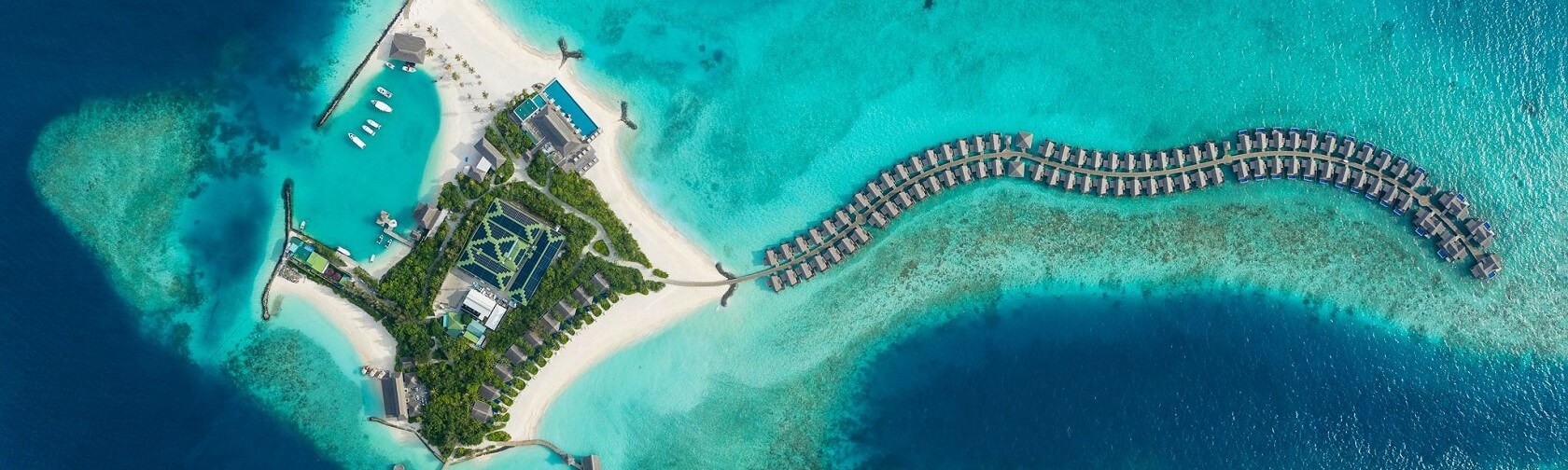
This ultra-luxury resort makes maximum use of solar energy and aims for full autonomy. A huge array of solar panels is integrated into the roof architecture of the main building, The Retreat, making it not only functional but also an aesthetic design element. The hotel has abandoned single-use plastic, uses biodegradable cleaning products, and has reduced its carbon footprint through the use of recycled wood in construction.
Kudadoo offers only 15 luxurious overwater residences made from eco-friendly materials, each with a personal butler. The hotel's Anything, Anytime, Anywhere dining concept lets guests enjoy dishes from world cuisines at any time and in any corner of the island.

Kudadoo Maldives Private Island
The brand, certified to the EarthCheck Silver standard, constantly improves its sustainability results. The hotel actively invests in solar farms, regularly organises beach clean-ups and activities for children and adults that help restore coral, build respect for the ocean and the environment.
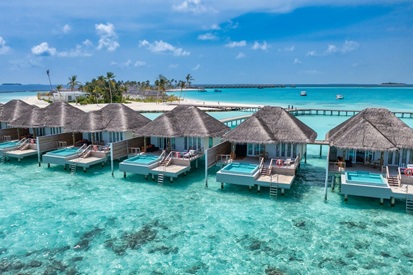
The island and overwater villas feature panoramic glazing that erases the boundaries with nature. Eleven restaurants offer a gastronomic journey, from plant-based cuisine at Roots, where a zero-waste approach and produce from the resort's own production are used, to refined Italian dinners or appetising burgers from food trucks on the shore of the ocean.

Patina Maldives, Fari Islands
This island is dedicated to immersive wellbeing, where ecology is linked to human health. Joali Being is EarthCheck certified and built on the principle of biophilic design, creating a space for deep renewal in harmony with nature. Plastic has been minimised on the island, a reef restoration programme is in place, and there are programmes to protect marine fauna. Tree planting and clean-up campaigns on land and in the water are held regularly. The Marine Biologist programme introduces children to the ocean through interactive games about marine life and how each of us can make a difference with simple actions.
All 68 villas have private pools. The resort's gastronomy is based on the farm-to-table principle, and the products are sourced from environmentally clean regions.

Joali Being
During the construction of this resort, the architects managed to preserve about 70% of the island's original vegetation. The resort uses advanced eco-methods of waste management, such as turning organic waste into fertiliser. Environmentally friendly alternatives to single-use plastic are used here, and water consumption is reduced.
Alila Kothaifaru's culinary concept combines care for the planet and local communities through the use of local seafood, organic regional produce, and an expanded vegetarian menu. The switch to an a la carte format also helps significantly reduce food waste.

Alila Kothaifaru Maldives
Sustainable development is one of the priorities of the Soneva chain. Soneva Fushi, a winner of international awards, including the World Travel Awards, actively uses a waste recycling system. Its unique Soneva Art & Glass studio melts old glass bottles into tableware and works of art.
The resort has its own organic gardens where fruit, vegetables and herbs are grown to reduce dependence on imported ingredients. Another feature of Soneva hotels is the free rooms with chocolate and ice cream made without preservatives.

Soneva Fushi
This resort follows the No News, No Shoes philosophy and offers guests a luxurious carefree holiday with an ecological focus. Gili Lankanfushi supports marine biology projects and develops the Coral Lines project, where guests can take part in planting coral cuttings on special ropes to restore the reef.
The resort's villas are designed to minimise the need for air conditioning. Gili follows a no-plastic policy and actively applies waste recycling programmes. The food is based on the freshest catch and produce from its own organic garden.

Gili Lankanfushi
The resort is guided by sustainability principles through the work of its own Marine Centre for Environmental Education. Six Senses Laamu avoids bringing plastic onto the atoll, replacing it with biodegradable packaging.
Special attention is paid to the quality of food. Microgreens, herbs and mushrooms are grown here, sauces and seasonings are made from scratch, and the resort also produces its own carbonated drinks and chocolate. In addition, Six Senses Laamu works with local communities that grow organic produce and buys the freshest seafood from local fishermen.

Six Senses Laamu
In the luxury hotel Park Hyatt Hadahaa, environmental sustainability is given top priority. The EarthCheck certified hotel has implemented a range of measures aimed at reducing energy and water consumption and at waste recycling and disposal. It has also abandoned single-use plastic, replacing it with eco-friendly alternatives such as glass water bottles and paper bags.

Park Hyatt Maldives Hadahaa
The resort is aimed at guests aged 8 and over and is located in a UNESCO Biosphere Reserve. Milaidhoo focuses on preserving the fragile balance of the sea. The hotel takes part in coral planting and reef cleaning, uses energy-efficient technologies, treats wastewater and uses treated water for irrigation, reducing freshwater consumption.
It also tries to source goods from local businesses, supporting the regional economy and at the same time cutting carbon emissions associated with international transport. Fresh greens are grown on the island, and a farm-to-table approach is used.

Milaidhoo Island
This beautiful green resort in Baa Atoll is famous for its partnership with the Olive Ridley Project foundation. A full rescue and rehabilitation centre for sea turtles operates on the island. Guests can watch the treatment process and the release of turtles back into the ocean. Coco Palm Dhuni Kolhu has a drinking water plant and a waste recycling centre that recycles materials such as aluminium, glass and polystyrene. Plastic bags and bottles are banned here. Herbs, fruit and vegetables for cooking are grown in the island's organic garden.

Coco Palm Dhuni Kolhu
The holder of an EarthCheck Silver certificate can boast one of the largest solar power plants in the Maldives. Energy-saving room control systems are used here, single-use plastic has been removed from the rooms, and plastic waste is recycled into clothing through a partnership with Parley. The Marine Research Centre runs four ocean conservation initiatives: coral reef restoration, turtle rehabilitation, manta ray research and fish breeding.
The menu features dishes made from local, environmentally clean and seasonal products, and a large part of the seafood comes from fishermen in nearby villages. The resort also has its own mushroom greenhouse.

Four Seasons Resort Landaa Giraavaru
The resort is known for its eco initiatives and wedding programmes.
LUX South Ari has installed one of the world's largest floating solar power systems, allowing it to save more than 260,000 litres of diesel fuel per year. In addition, LUX* South Ari Atoll hosts weekly coral planting workshops, eco tours and evening presentations on marine biology.

LUX South Ari Atoll Resort & Villa
This luxury hotel in Shaviyani Atoll became famous for creating Coralarium, the first underwater art installation in the Maldives, which also serves as an artificial reef. The resort also launched its own laboratory for turning ocean plastic into unique souvenirs and other marine themed items, including furniture.
Sirru Fen Fushi aims to cut carbon emissions and generates electricity with solar panels. It also turns food waste into compost for the resort's organic garden. Most drinking water comes from its own desalination plant.
.jpeg)
Sirru Fen Fushi (ex.Fairmont)
The resort holds an EarthCheck certificate. Amilla Maldives has a strong gastronomic concept. There is not only an organic garden here, but also a banana plantation, a mushroom growing area and a coconut processing workshop.
Amilla Maldives also pays special attention to reducing energy consumption, responsible waste management, supporting local island communities and protecting the environment. One of the best offers in the protected Baa Atoll.

Amilla Maldives Resort & Residences
One of the classic resorts of the Maldives, which has protected the island's natural ecosystems, lagoon and underwater world for decades.
Baros has introduced the Eco-Dive system, which teaches divers careful interaction with the underwater world. The hotel treats water and reuses it for irrigation, has installed LED lighting systems with lower energy use, fitted villas with a heat exchange system that heats bathing water, and uses biodegradable cleaning products.

Baros Maldives
During the construction of this luxurious resort of the Anantara chain in the Maldives, interference with nature was minimal, which proves a careful attitude to the island's untouched ecosystem.
Anantara Kihavah runs large-scale reef research and assessment, develops coral planting and coral adoption programmes, has introduced an initiative to abandon single-use plastic, and continues to create and improve green areas. The island has an orchid garden and an organic garden, a plant that turns seawater into drinking water, energy-saving systems, and a well-established process of turning kitchen organic waste into fertiliser.

Anantara Kihavah Maldives Villas
The main feature of the resort is that it minimises its impact on the coral reef and the island. Prefabricated modules were used during construction and were brought in fully assembled, allowing work on untouched sand. The Ritz-Carlton uses solar energy, has its own water purification plant, provides bamboo tableware and stainless steel straws, works with scientists, marine biologists and environmental defenders, and also uses drones to locate injured turtles.
In the resort's restaurants, priority is given to locally produced products. The menu includes plant-based dishes, as well as eggs from free-range hens.

The Ritz-Carlton Maldives, Fari Islands
The Atmosphere Hotels and Resorts chain in the Maldives holds a Green Globe certificate that confirms a sustainable and responsible approach. Solar panels are installed on the roofs of the properties, which helps significantly reduce carbon emissions.
In addition, the resorts Atmosphere Kanifushi Maldives, Varu By Atmosphere and Raaya by Atmosphere are equipped with water bottling plants, which helps cut the use of plastic.

Atmosphere Kanifushi Maldives