Singaraja in Bali: what to see, how to get there and where to stay
By Anna Skumina
07.09.2026
This place is very different from the south of Bali. To see a less dynamic side of Bali, head to Singaraja - a city on the island's northern coast, the former administrative capital of Bali and the centre of the Buleleng region. Colonial-era architecture has been preserved here, lively local markets operate, Chinese temples stand alongside Balinese ones, and everyday life is much less focused on tourists than in the popular areas of the south.
Singaraja is also interesting because of its location. The city can be used as a starting point for trips to the waterfalls of North Bali, Lakes Buyan and Tamblingan, the beaches of Lovina, Banjar Hot Springs and the region's many temples. We will explain what to see in Singaraja and the surrounding area, how to get here and where it is best to stay in northern Bali.

Depositphotos
Before the arrival of the Dutch, Singaraja and its surroundings were part of the powerful Kingdom of Buleleng. After Dutch control was established, the city became an important administrative and port centre. During the colonial era, Singaraja was the administrative centre of Bali and the Lesser Sunda Islands, and it remained the capital of Bali Province until 1958, when this function was transferred to Denpasar.
This period left a noticeable mark on the city's architecture and layout. Walking through the old quarters of Singaraja, you can see preserved colonial buildings - a reminder of the time when the northern coast played a much more important role in the island's commercial and administrative life.
Today Singaraja presents a vivid cultural diversity. Alongside traditional Balinese architecture, colonial-era buildings, a Chinese temple and neighbourhoods formed around the old port have been preserved here. At the same time, the city remains primarily a local rather than a tourist centre. A trip to Singaraja gives you the opportunity to see life in Bali beyond the resort areas.

Depositphotos
Singaraja's main attractions are connected with the city's history, its culture and its past as the largest port on the northern coast. Many interesting places are relatively close to one another, so the central part of the city is convenient to explore in one day.
Gedong Kirtya is one of the most unusual places in Singaraja. The library is known for its collection of ancient Balinese lontar manuscripts, whose texts were written on dried palm leaves. The collection is devoted to history, religion, literature, traditional medicine and other aspects of Balinese culture.

Gedong Kirtya
Pelabuhan Buleleng recalls the time when Singaraja was an important trading port. Goods passed through the northern coast and merchants arrived from different parts of Asia, which largely shaped the city's unusual cultural environment.
Today the harbour has lost its former economic importance and has become a place for walks. It is better to come closer to the evening, when it gets cooler and you can walk along the sea.
Not far from the old harbour is the Chinese Ling Gwan Kiong Temple. Its appearance is connected with the Chinese community that formed in port-city Singaraja through trade. The small colourful temple is noticeably different from familiar Balinese shrines and illustrates the cultural diversity of the old port city.
Also known as Puri Agung Singaraja. The palace is connected with the history of the local ruling dynasty. It is not a huge palace complex in the usual tourist sense, but elements of traditional Balinese architecture and details related to the history of the Kingdom of Buleleng have been preserved here.
One of Singaraja's recognisable symbols is Tugu Singa Ambara Raja with a figure of a winged lion. It is located in the city centre and is connected with the symbolism of the Buleleng region.
To see the city's everyday life, it is worth visiting the local markets. Tropical fruits, vegetables, spices, fish, prepared food and ordinary household goods are sold here. This is not a tourist attraction in the classic sense, but rather an opportunity to see Singaraja as local residents know it.

Depositphotos
One of Singaraja's main advantages is its location. Waterfalls, mountain lakes, temples and the resort coast of Lovina are located around the city, so it is convenient to stay here for several days and explore North Bali.
North Bali is famous for its waterfalls, some of which are relatively close to Singaraja.

Depositphotos
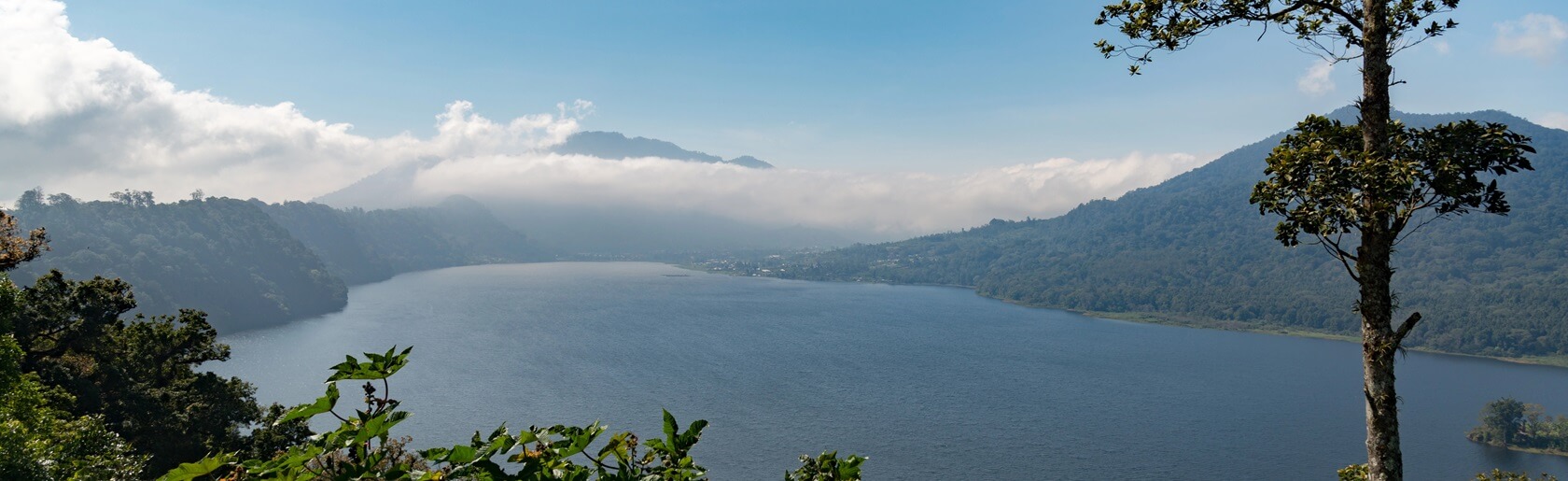
South of Singaraja, in the mountainous part of Bali, are two neighbouring lakes - Buyan and Tamblingan. After the hot coast, this area feels completely different: it is cooler here, the slopes are covered with dense forest, and mist often drifts over the water.
In the lake area, you can take a walk through the forest, see small temples and ride in a traditional boat. The famous Handara Gate is also nearby.

Depositphotos
About 10 km west of Singaraja begins the Lovina resort area. Its beaches are known for dark volcanic sand and a calmer atmosphere compared with the southern resorts of Bali.
Lovina's main activity is boat trips to watch dolphins at sunrise. Boats usually go out to sea early in the morning. When choosing an excursion, it is worth considering that this activity is very popular and a large number of boats may be at sea at the same time.
Lovina also offers a much wider choice of resort hotels, restaurants and tourist infrastructure than Singaraja itself.

Depositphotos
West of Lovina are Banjar Hot Springs. Thermal water flows into stone pools surrounded by tropical vegetation. Banjar can be combined with a trip through the western part of North Bali or a visit to the nearby Brahmavihara-Arama Buddhist complex.

Depositphotos
Singaraja and the Buleleng region are rich in temples, so a cultural route can be continued outside the city.
Among the most interesting are:

Depositphotos
For a trip to West Bali National Park it is better to set aside a separate day. This is a large protected natural area with mangrove forests, savannas, tropical forests and coastal ecosystems. Visitors come here for trekking and birdwatching, while the marine part of the region is interesting for snorkeling and diving. The reefs near Menjangan Island.

Depositphotos
Singaraja is located on Bali's northern coast, so the journey from the main tourist areas in the south takes several hours. The route passes through the central mountainous part of the island and is quite scenic in itself.
By car or with a driver. The most convenient option is a car with a driver or a private transfer. From southern Bali, the journey usually takes around 3-4 hours. Part of the route follows winding mountain roads. If you are planning not just a transfer but a full trip to the north of the island, you can stop by Lakes Buyan and Tamblingan on the way and take photos at Handara Gate.
Grab and Gojek services. For a long trip north, it is more convenient to check availability and price in advance. When travelling with luggage, choosing a car rather than a motorcycle taxi is more practical. Keep in mind that car availability for the return trip from remote areas may be lower than in Denpasar, Kuta or other tourist centres in the south.
By bus. Public transport is a more budget-friendly but less convenient way to reach Singaraja. The route may require transfers, and the journey usually takes longer.
The central part of Singaraja can partly be explored on foot: some historic buildings, markets and city attractions are located relatively close together.
For longer trips, it is more convenient to use a car or motorcycle taxi. If you plan to visit waterfalls, mountain lakes, temples and other attractions in North Bali, renting a car with a driver for the whole day is a practical option.

Depositphotos
The choice of tourist hotels in Singaraja itself is relatively small. There are significantly more options along the northern coast, especially in the Lovina area.
The hotel is located in a green part of North Bali and is better suited to a nature-filled stay than to exploring urban Singaraja. Accommodation is in rooms overlooking the garden and surrounding mountains. Free Wi-Fi, parking, relaxation areas with hammocks and barbecue facilities are available. From here, it is convenient to visit the region's natural attractions, including waterfalls.
The Grand Villandra Resort is located in the Lovina area, so it is more appropriate to consider it as a beach base for exploring Singaraja and the northern coast. The resort offers rooms and villas, including options with private pools. There is a restaurant, spa and swimming pool, and yoga classes are held. From Lovina it is also convenient to take the famous morning boat trips to watch dolphins.

The Grand Villandra Resort
Handara Golf & Resort Bali is located not in Singaraja but in the highland part of Bali near Bedugul. It is worth keeping in the selection specifically as an alternative option for travelling around the north of the island.

Handara Golf & Resort Bali
InBalance Resort is located in the Lovina area and is suitable for those who prefer a small resort to large hotel complexes. There are only a few villas, as well as a restaurant and swimming pool. It is convenient to combine a beach holiday with trips to Singaraja, Banjar Hot Springs, waterfalls and other attractions of North Bali.

InBalance Resort