Ujung Kulon National Park and Krakatau Volcano: the wild nature of Java
By Anna Skumina
22.06.2026
At the western tip of the island of Java lies one of the most unique places in Indonesia – Ujung Kulon National Park. This is where the last Javan rhinos in the world, untouched tropical forests, mangroves, coral reefs and scenic islands have been preserved. In addition, this region is linked to the history of one of the most famous volcanoes on the planet – Krakatau. We explain what is interesting about Ujung Kulon, what to see in the park and how to organize the trip.

Depositphotos
Ujung Kulon National Park is located at the far west of the island of Java, about 300 kilometers from Jakarta. The protected area includes tropical forests, the Ujung Kulon peninsula and several islands, including Panaitan, Handeuleum and Peucang.
The park covers an area of more than 1,200 square kilometers and is listed as a UNESCO World Heritage Site thanks to its unique ecosystems and rich biodiversity.

Depositphotos
The history of the park is closely connected with the catastrophic eruption of Krakatau Volcano in 1883. A huge tsunami and volcanic material changed the western coast of Java and many neighboring islands.
After the natural disaster, a significant part of the territory gradually recovered naturally and turned into a unique nature reserve. Later this area received protected status, and in 1992 it was officially included on the UNESCO World Heritage List.

Depositphotos
Ujung Kulon has a varied landscape and includes a number of islands, among them Panaitan, Handeuleum and Peucang. The climate is tropical, with a pronounced wet season. The average temperature ranges from 25 to 30 degrees, creating a warm and humid climate all year round.
Ujung Kulon is known above all as the last natural habitat of the critically rare Javan rhinoceros. Preserving this species is one of the main tasks of the reserve. It is extremely rare to see a rhino during a journey, but the very fact that the largest protected population exists here makes the park unique.
Besides the Javan rhino, many other animal species live in the park.
More than 700 plant species grow in the park, including giant trees that sometimes reach 40 meters in height, as well as a wide variety of ferns, orchids and medicinal plants, which give the land part of the park a lush green appearance.
The coral reefs and coastal zones of Ujung Kulon are home to sea turtles and a huge number of fish species.

Muhammad Adimaja, CC BY-SA 4.0, via Wikimedia Commons
Ujung Kulon offers many opportunities for ecotourism, allowing visitors to enjoy its natural beauty. Guided tours for visitors can last up to 5 days:

Yan Stevanus Kacaribu, CC BY-SA 4.0, via Wikimedia Commons
Among the sights of the park, three islands are especially interesting for travelers.
A remote and relatively untouched island with an area of about 170 square kilometers. Panaitan is considered one of the best-known islands of the reserve. It attracts surfers with strong ocean waves and its distance from mass tourism. There are also good spots for diving and snorkeling here.
Handeuleum is famous for the largest mangrove forests in the region. Here you can take a canoe trip along the Cigenter River and watch birds, macaques, deer and monitor lizards in their natural habitat.
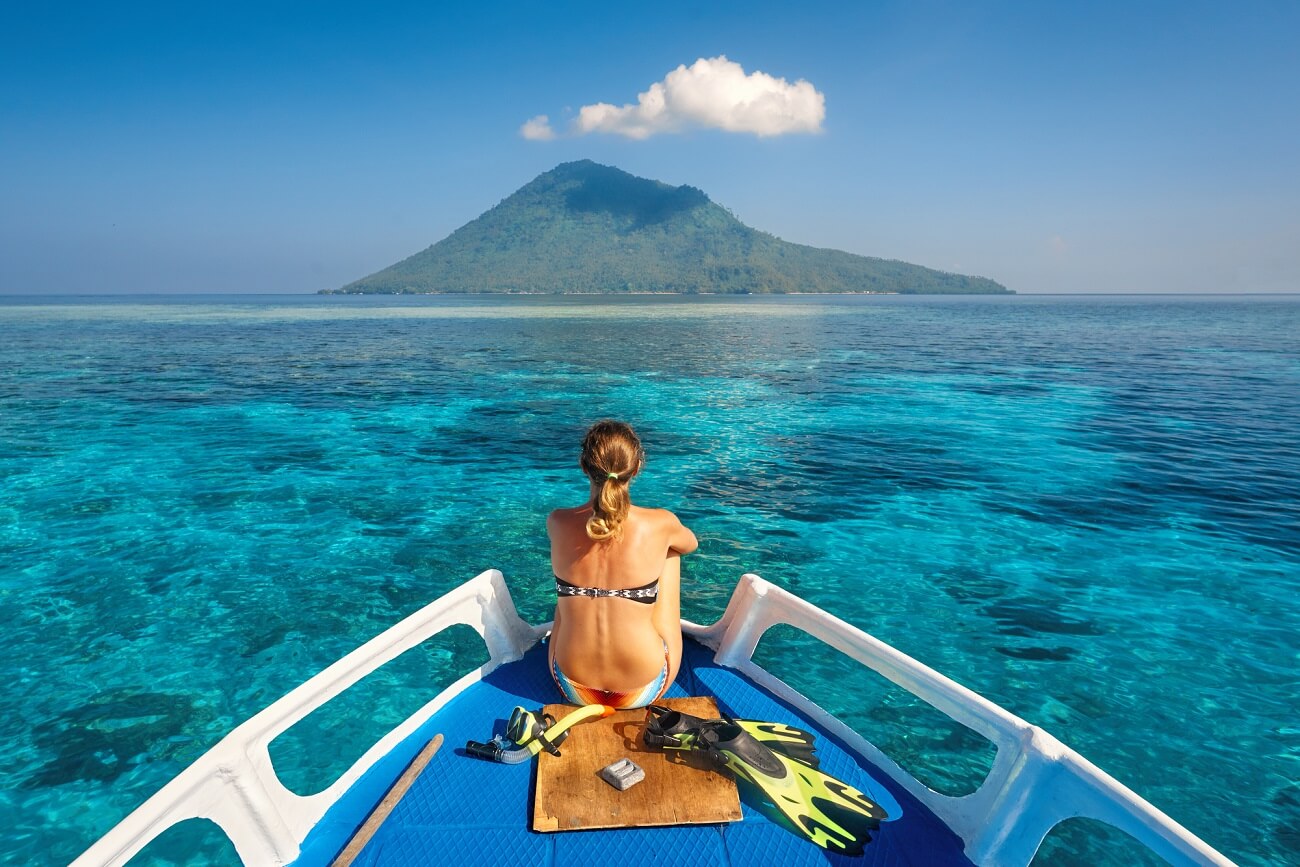
One of the most picturesque islands of Ujung Kulon Park is Peucang Island. It is located in the Panaitan Strait, opposite Cidaon beach. This small island attracts visitors with its white beaches and clear water. Coastal zones, mangroves, dense forests and meadows. This variety of ecosystems has become home to many animals.
Here you can go snorkeling, relax on the beach, take a boat trip, watch bantengs, peacocks, deer and wild boars in natural conditions. There are several eco-cottages on the island for overnight stays.

Depositphotos
When speaking about Ujung Kulon, it is impossible not to mention Krakatau – one of the most famous volcanoes in the world. Its eruption in 1883 became one of the most destructive in modern human history.
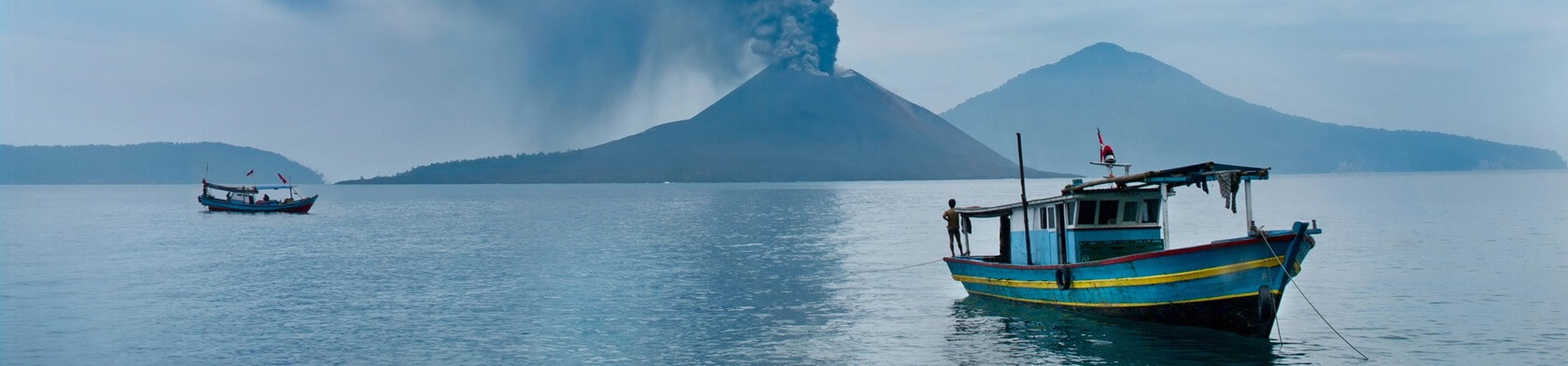
Today tourists more often visit Anak Krakatau ("Child of Krakatau"). This is a young volcano that began to form in the caldera of the destroyed Krakatau in 1927. Anak Krakatau is a living laboratory of volcanic activity. Frequent, though minor, eruptions occur here.
Some travel companies organize boat trips to the volcano. The possibility of landing depends on current volcanic activity and restrictions from the park administration. Current visiting rules should be checked with guides before the trip.

Depositphotos
The main gateway to Ujung Kulon National Park is the village of Tamanjaya, located on the western coast of Welcome Bay. The easiest way to get there from Jakarta is by car. As an alternative, you can take a bus through Labuan, which will take about 3–4 hours, and then transfer to a bus to Tamanjaya. Please note that the bus from Labuan leaves only once a day. If you miss it, take a bus to the village of Sumur, which runs quite often, and then use the services of a motorcycle taxi (ojek).
In Tamanjaya, go to the National Park office located near the pier. A park employee will provide all the necessary information, help with accommodation and logistics, and collect the entrance fee.
In addition, you can enter the park by sea, heading directly to the islands of Panaitan, Peucang or Handeuleum. Upon arrival, you also first need to find a representative of the national park.

Mujionomaruf, CC BY-SA 4.0, via Wikimedia Commons
Guesthouses and simple lodges are available in the villages of Tamanjaya and Sumur. For a deeper immersion in nature, you can stay in eco-cottages on Peucang Island. Meals are available in local warungs.