10 Unique Facts About Indonesia
By Anna Skumina
10.02.2026
Indonesia is a country of incredible diversity, encompassing its natural resources, religions, and people. There are unique, striking, and even shocking facts about Indonesia that you'll find interesting.

Depositphotos
More than 275 million people live on this vast archipelago. Members of many tribes and ethnic groups may go their entire lives without meeting anyone from a particular ethnic group, despite living administratively within the same state. Not to mention the language barrier. Since 1945, when Indonesia became independent, Bahasa has been the country's official international language. However, there are several hundred languages and dialects, some of which have developed literary forms. To give an idea of the scale, in the province of Papua alone, there are approximately 270 dialects in common use, most of which are not written languages.

Depositphotos
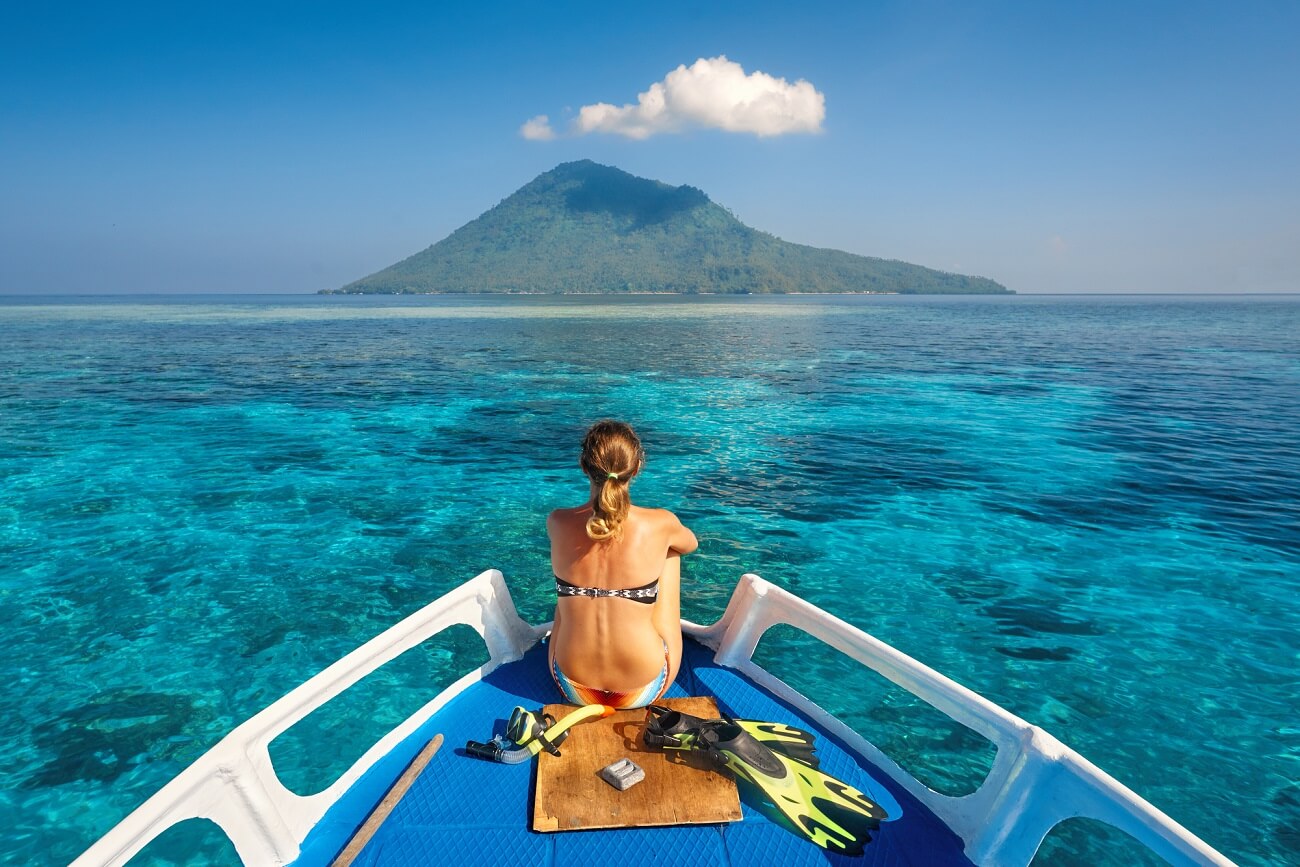
Today, Indonesia consists of 17,504 islands! However, many cartographers still debate the exact number. As the climate changes and sea levels rise, this number may change in the future. The islands of the world's largest maritime nation range in size from tiny sandy coastlines to such vast islands as Kalimantan and Sumatra.

Depositphotos
And a little more about scale. The legendary Lake Toba was formed approximately 75,000 years ago during the most devastating volcanic eruption, which plunged the planet into the last Ice Age. It's located in the north of the Indonesian island of Sumatra. The lake's depth reaches 500 meters in places, and its length is up to 100 kilometers!

Depositphotos
In the center of Lake Toba lies the so-called "island within an island." Samosir, which emerged on the world's largest lake, is roughly the size of Singapore. But this isn't the most interesting fact; rather, it's its shocking history. The descendants of the Batak people, who ate their enemies and criminals who violated domestic laws, live here. The last known cases of cannibalism here officially occurred about 200 years ago. Today, they are a peace-loving people who prefer chicken and warmly welcome tourists as one of their main sources of income. Samosir boasts decent hotels, incredible views, and a couple of eerie sites where cannibalism—the ritual execution of criminals for dinner—took place in ancient times.

Depositphotos
Exotica lurks around every corner in Indonesia, from smoking volcanoes to culinary delights. It's no surprise, then, that the forests of Asia's most "natural" country are home to over 100 endangered animal species. These include the Sumatran tiger and Sumatran rhinoceros, orangutans, Komodo dragons, anoa buffalo, baboons, sea turtles, and other animals. Indonesia's tropics offer a refuge for these species from a persecuting and relentlessly advancing civilization.
Despite the archipelago's vast expanse, its landmass accounts for only 1% of the Earth's total. Yet, Indonesia is home to 12% of all known mammal species and 17% of all known bird species.

Depositphotos
This is the only archipelago home to orangutans and the planet's oldest lizards. Translated from Indonesian, orangutan means "man of the forest." In Indonesia, these amazing jungle creatures live in their natural habitat on the island of Borneo and in northern Sumatra, specifically in the wild forests of Gunung Leuser National Park. As for the mesmerizing monitor lizards, their homeland is the Komodo Island National Park, as well as Padar, Rinca, Gili Motang, and Flores.

Depositphotos
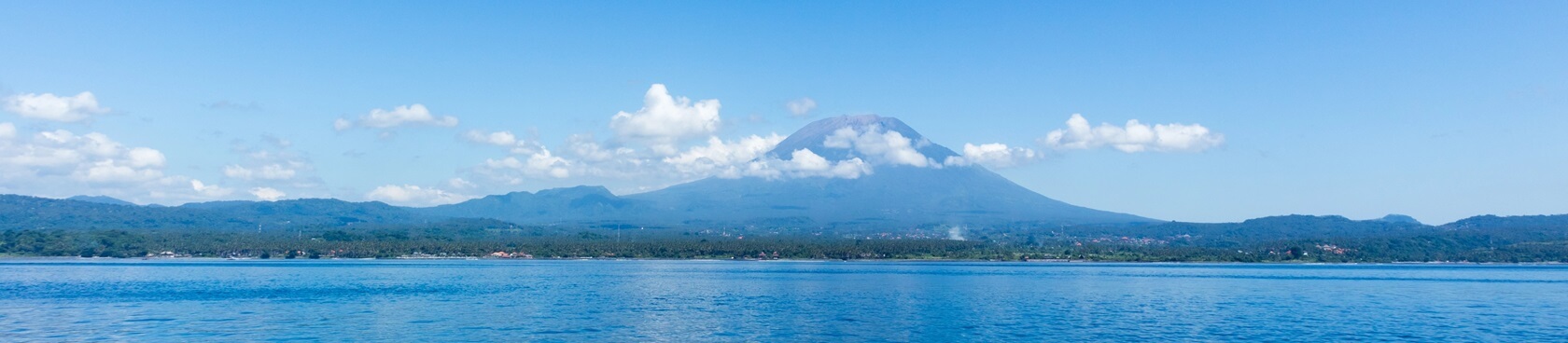
Indonesia ranks third in the world in terms of volcanic peaks, after the United States and Russia. But it is here that they erupt most frequently. Overall, Indonesia's islands currently contain 130 volcanoes, 58 of which are active to varying degrees. The most recent, most catastrophic eruption in the country's history occurred in 1883, when the mighty Krakatoa erupted. Then, two gigantic tsunamis killed more than 36,000 people and destroyed 165 coastal towns and villages. Krakatoa's explosion was heard over 4,600 kilometers away, and ash blanketed Singapore, located 840 kilometers away. The aftermath of the eruption, to varying degrees, was felt across the globe for several years to come.

Depositphotos
Rafflesia arnoldii, also known as the "corpse lily" due to its foul odor after flowering, is the largest flower on the planet. These enormous flowers grow in the tropical forests of Indonesia. They are extremely difficult to find, as the bud develops for several months before opening and lasting only a few days. The orange-red, five-petaled parasitic flower has no stem or leaves, yet can grow up to 3 feet tall and weigh up to 10 kilograms. The flower was discovered by the Italian explorer Odoardo Beccari in 1878 in the forests of Central Sumatra.

Depositphotos
Indonesia's history, closely intertwined with European and Asian countries, has fostered a cultural and religious mix. The country has six main religions: Islam, Protestantism, Catholicism, Hinduism, Buddhism, and Confucianism. The vast majority of Indonesians (approximately 86%) are Muslim.

Depositphotos
Some Indonesian funeral traditions baffle tourists. For example, in Bali, the cremation ceremony is celebrated as a family celebration. It's a joyful day when a person passes from earthly life into nirvana.
Things are far more interesting among the Toraja people on the island of Sulawesi. They bury their dead in rock caves, as the higher they are, the closer they are to heaven. A wooden statue is erected at the entrance to the grave. For a more realistic appearance, the deceased's clothes are placed on it. When the clothes wear out, they are replaced with new ones, a process accompanied by a separate ceremony. In the Toraja region, it can sometimes take several months from the moment of death to the burial ceremony. During this time, the deceased is cared for at home, pretending they are simply ill.
Mysterious and unique Indonesia attracts thousands of curious tourists. Treat yourself to an unforgettable adventure!

Depositphotos