What to see in Java, Indonesia: 16 most visited places
By Anna Skumina
05.03.2026
Java is the most populated island of Indonesia, and at the same time, one of the richest cultural and historical corners of the country. There is no shortage on Java of amazing natural places, fantastic temples, contrasting cities, and authentic villages. If you choose Java, you will get volcanoes, noisy streets, colorful markets and endless food stalls, authentic mountain villages, mighty waterfalls, and such a choice of excursions that your head will spin.
For the most comfortable trips around Java, plan your journey in the dry season, which lasts on the island from June to October.

Depositphotos
You will definitely discover how different life can be in one city in the capital of Indonesia. Jakarta is not just a transport hub, economic and trade center of the country. It is a striking city of contrasts, and for tourism - a valuable find. If you get carried away, you can devote more than one holiday to Jakarta.
Walking through the dynamic and noisy streets, you will notice 19th-century colonial architecture built by the Dutch, hear the call to prayer from the nearest mosque, against the background of which Chinese restaurants and futuristic skyscrapers have been built. It is a partly chaotic megacity where cultures, nations, and languages have mixed, and just two steps away from luxury life, poverty opens up.
Do not miss several places in the capital:

Depositphotos
This city is called the cradle of civilization, the heart and soul of Java. The cultural capital offers many impressions, even beyond the legendary Buddhist temple of Prambanan. From Jogja, as the city is called by the Javanese, begin the most amazing excursions around the island. Be sure to visit in the city center and nearby surroundings:
The famous shopping street Malioboro, one of the most touristy places in Java, is also located in Yogyakarta. This place resembles a large and very lively Chinatown. A huge number of inexpensive food places with typical street aromas, stalls with all kinds of goods, hotels, becaks, and bright horse-drawn carriages.

Depositphotos
Or the "Buddhist temple on the hill", about which legends are told. According to one version, Borobudur was built by Indian Brahmins in the 7th-8th century. After many years of oblivion, covered by volcanic ash after the eruption of Mount Merapi and overgrown with jungle, the majestic temple was restored in 1984. During the same period, Borobudur was included in the UNESCO World Heritage list.
The temple is built in the style of a tiered mandala that symbolizes the Universe. Visiting Borobudur will be much more interesting with a guide who will explain the philosophy of Buddhism and interpret the wall carvings. The pilgrimage of tourists to the most amazing temple in Indonesia never stops. It is located 40 kilometers from Yogyakarta.

Depositphotos
The largest complex of Hindu temples, a little younger than the Buddhist Borobudur, 10th century. Their histories are very similar. Prambanan was covered with volcanic ash and lost in ancient jungle. After its accidental discovery in 1918, excavations of the temples lasted a full 35 years. The complex has been a UNESCO World Heritage Site since 1991.
Prambanan has more than 500 temples. It is the largest Hindu temple complex on Java, and one of the largest in all of Indonesia. It is not only an architectural and cultural treasure, but also proof of the peaceful coexistence of religious confessions in the past, since the majestic Buddhist Borobudur is located very close.
You should allocate one day each for visiting Borobudur and Prambanan. You can buy 48-hour package tickets that include both complexes and the ruins of Ratu Boko Palace.

Depositphotos
Flat fertile soil, the bottom of an ancient lake, surrounded on all sides by volcanic complexes. This place is located at an altitude of 2100 meters above sea level. The incredibly mineral-rich land made the plateau the largest producer of potatoes in Indonesia. Other agricultural crops are also successfully grown here. Sulfur springs, colored volcanic lakes, and incredibly rich greenery. In addition to natural features, the plateau has a large number of ancient Hindu temples. "Dieng" translates as "abode of the Gods".
Location: 115 kilometers from Yogyakarta.

Depositphotos
The greatness of Javanese nature can be recognized from the viewpoints of the amazing Tumpak Sewu, Coban Sewu, waterfalls. In fact, this is not one waterfall, but dozens of water streams that fall from a cliff into a 120-meter gorge. This natural wonder is located at the foot of Mount Semeru. If you launch a drone, it becomes clear why Tumpak Sewu is considered the most beautiful waterfall of Java and all Indonesia.

Depositphotos
No less beautiful is this waterfall in the dense jungle of East Java. It is located in the Pronojiwo area, in Lumajang. The height of the falling water is about 100 meters. This hidden waterfall is the reward for a 30-minute walk through dense vegetation. The path to Kapas Biru also passes through a rice field. The landscapes of the surroundings would be perfect for filming another King Kong movie. Here there is only jungle with huge bamboo trees, ancient red cliffs, sounds of nature, and the noise of water breaking on the rocks.

Depositphotos
An unusual city, the capital of West Java, which attracts with its history, colonial architecture, and tea plantations. For its well-preserved atmosphere of a 19th-century European city, Bandung was nicknamed the Paris of Java. Walk along the central street with many art deco buildings, visit several interesting museums and a large zoo, and get acquainted with local culture at the Saung Angklung Udjo center. An hour from the city, tourists are drawn to the active volcano Tangkuban Perahu and the crater lake Kawah Putih.

Depositphotos
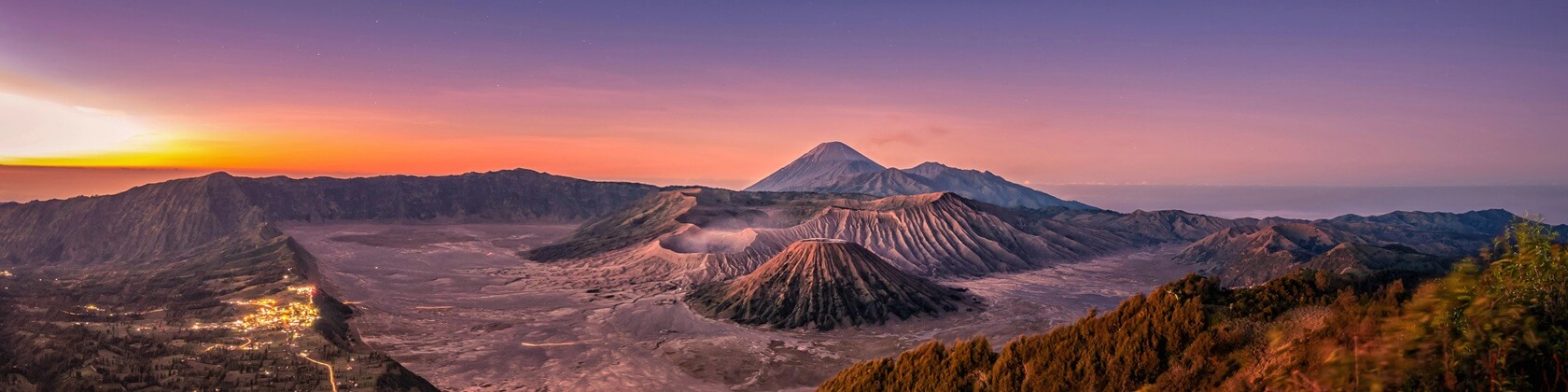
Otherworldly landscapes are offered by one of the most Instagrammable volcanoes in Indonesia. Bromo at sunrise is the main goal of most travelers on Java. The views are truly shocking, in a good way. Meet the sunrise over Bromo in clear weather.
A morning excursion to the mountain can be booked from Malang or Surabaya. The tour includes climbing to the summit of the active volcano with views of the crater and the most beautiful landscapes of the peaks of Semeru and Batok.
Tour price: about 710,000 Indonesian rupiah, as part of a group. This includes round-trip transport and guide services.

Depositphotos
The ascent to Ijen will not be easy, but it will be a worthy adventure. The ticket offices of the National Park open at 2:00, and you should already be there by that time. Ijen is a group of volcanoes spread within a radius of 20 kilometers around a caldera with a sulfur lake up to 200 meters deep. Among all the mountain adventures that Indonesia can offer, the climb to the Ijen crater will be one of the most intriguing.
Excursions depart from Surabaya, Malang, and Banyuwangi. There is an excellent three-day tour with visits to Bromo and Ijen, which includes accommodation, transport, breakfast, and guide services.
Price of the Ijen tour: from $65 for one adult in a group of 4 people.

Depositphotos
No less breathtaking views await tourists at another volcano on Java. Tangkuban Perahu is located north of Bandung. This "living" volcano offers good adrenaline and the most impressive photos you will get on Java. The excursion to the crater is very comfortable, because you can drive right to the rim and no walking effort is required at all. Depending on the chosen tour, after photos against the background of the frightening crater, you can go to a picturesque strawberry farm or a coffee plantation.
Tour price: about $22.

Depositphotos
Over the past few decades, quite destructive eruptions have happened here, which your guide and information boards will tell you about. A jeep safari to the summit of Merapi, with a visit to an old bunker and a mini museum, is one of the favorite activities of both Javanese and tourists, so the trip should be booked in advance.

Depositphotos
An unusual place with mixed impressions. In the central part of Malang, in East Java, there is the result of one university project. Local slums were painted by students in all the colors of the rainbow in order to attract tourists to a poor district and financially help local residents. The idea worked. Today, visiting Rainbow Village as a bright and authentic corner is quite popular.
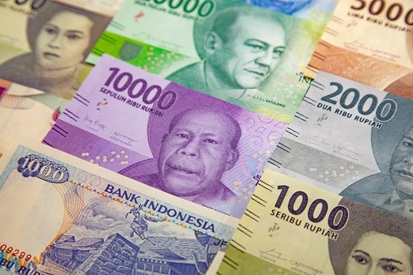
The cost of a walk through the colorful settlement is symbolic and amounts to 5,000 Indonesian rupiah, about 0.3 dollars.

Depositphotos
A natural park of West Java that is still hidden from a big flow of tourists. This is an amazing part of the island where you can admire sea surf and stunning sunsets on black-and-white coasts for hours. The whole southern part of the town is occupied by the National Park. These are dense forests with porcupines, hornbills, monitor lizards, various species of monkeys, and huge bats.
Territorially, the reserve is divided into two zones - the recreation park and the jungle. Small deserted bays are surrounded by untouched coasts bordered by tropical vegetation. The recreation park is equipped with neat trails, and along the way there are caves and ruins of a Hindu temple. On the western side of the peninsula there is the white sandy Pasir Putih beach - the best swimming place in the area.
English-speaking guides can be found right at the entrance. The cost of services is about 350-400,000 Indonesian rupiah for a group of 4 people.

Depositphotos
A land of wild nature with a beautiful lagoon surrounded by mangroves. It is a great place for green tourism, where there are no benefits of civilization. Locals and guests of Java go to Sempu to spend a day or two away from everyone and enjoy unity with nature.
How to get there: the nearest large city is Malang. From there you can get to Pantai Sendang Biru pier, from where a fishing boat will take you to Sempu in 15 minutes. You will need to walk through the jungle for more than an hour to reach the treasured blue lagoon.
In the surroundings of Malang there are several places where you can rent camping equipment.

Anthonikovii, CC BY-SA 4.0, via Wikimedia Commons
Floating markets, as a separate kind of attraction, are very popular in Indonesia. Do not miss the floating market in the town of Lembang, located 15 kilometers from Bandung. Visiting the two towns can be successfully combined.
The place is aimed at tourists, so there is more than enough color here. Boats of local traders filled with all kinds of goods are moored at the pier where visitors walk. Most of the assortment consists of farm vegetables and fruits. Tourist tours often stop by the market in Lembang in transit, so it will not be difficult to include this colorful corner in your travel route.

Depositphotos