Where to see orangutans in Sumatra: the best places for wildlife travel
By Viktoria Mudra
04.05.2026
Sumatra is one of the last places on Earth where you can see orangutans in their natural habitat. It is exactly for a meeting with these rare primates that travelers head into the tropical forests of Indonesia, choosing multi-day jungle treks, expeditions to national parks and remote villages on the edge of the wild. There are no classic safari routes here for a couple of hours, only a real tropical exploration experience, and each trip can bring rare encounters with amazing inhabitants.

Depositphotos
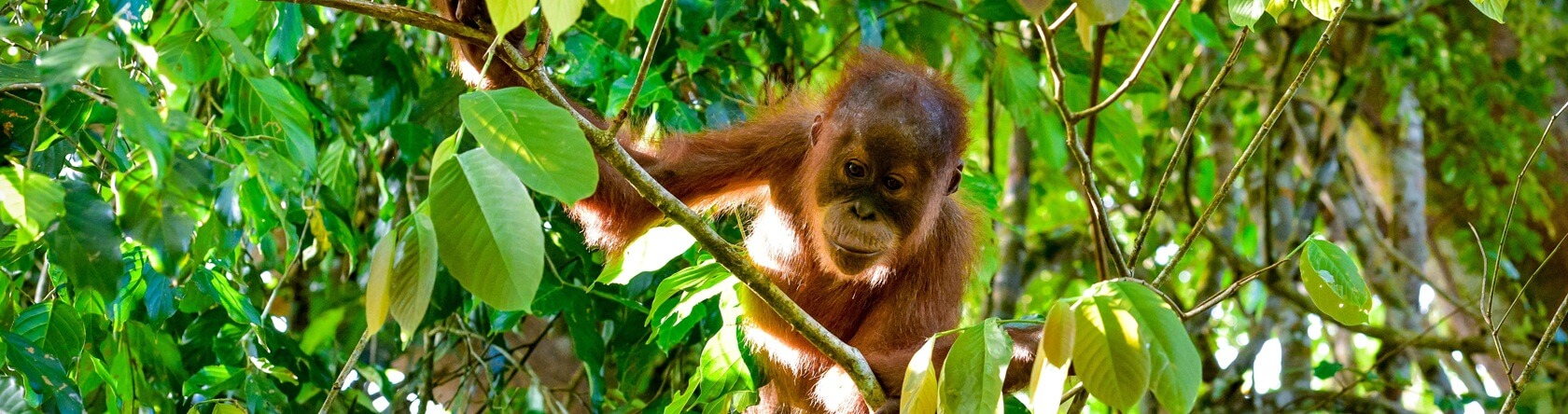
The Sumatran orangutan is one of the rarest and most amazing primates on the planet. This species is found only on Sumatra and is under critical threat of extinction. Unlike many other animals, orangutans live slowly: they mature for a long time, reproduce rarely and can spend almost their whole lives in the crowns of tropical forests.
Meeting an orangutan in the wild is not just observation, but a rare experience of contact with one of the most intelligent creatures on the planet.

Depositphotos
Gunung Leuser Park is considered the main place to look for orangutans. The chances of seeing primates here are very high. The huge territory of rainforests, mountains, rivers and swamps is included in the UNESCO World Heritage list and remains one of the most important ecosystems in Southeast Asia. It is here that the rare world of real Sumatran jungle has survived, where along with orangutans live gibbons, hornbills, elephants and other endangered species. For travelers, the park opens the opportunity to see wildlife not in the format of an excursion, but as a real adventure.
Despite the formal protection of Indonesian law, the rich Leuser ecosystem continues to face threats from mining, palm oil plantations and the pulp and paper industry. Only about a third of the monkeys live in protected reserves recognized throughout the world.
Entrance fee to the park: about 10 dollars. Visitors must be accompanied by a licensed guide.

Depositphotos
Bukit Lawang is considered the most convenient area for getting to know orangutans. The small village on the edge of the jungle has long become the gateway to Gunung Leuser National Park and the starting point for treks. Routes into the forest begin here. The place attracts with a combination of accessibility and real wildlife: it is relatively easy to get here from Medan, and the routes are suitable both for a first acquaintance with the jungle and for deeper hikes with overnight stays in the forest.
Bukit Lawang grew around the now closed Bohorok Rehabilitation Center, created in 1973 to treat orphaned animals and return them to the wild. Until 2005, Bukit Lawang served as a place of adaptation to the wild for rescued orangutans. Those that were successfully rehabilitated were released into Gunung Leuser Park, where staff cared for them. The animals were fed daily at feeding platforms, so tourists could see the process and the chances of observing primates were significant. Several rescued orangutans are semi-wild, meaning they live freely but still come to people for food. These are exactly the individuals you are most likely to meet if you go on a short trekking route from Bukit Lawang.
This is a lively village with hotels, restaurants, shops and bars. In most places there is wi-fi, and cafes with Western and local cuisine. You will meet many other travelers here.
How to get there: The village is located 90 kilometers west of Medan, the main air gateway to Sumatra.

Depositphotos
Ketambe is often called the best place on Sumatra to observe wild orangutans. There are fewer people here, almost no mass tourism, and a stronger feeling of a real expedition.
Ketambe is located in the southern part of Aceh province and is the second gateway to Gunung Leuser National Park. Some guides say that the probability of seeing a wild orangutan here is at least 90%. However, a more realistic estimate is 50-60% for one-day hikes. The chances increase during multi-day treks. Unlike Bukit Lawang, orangutans in Ketambe are never fed and do not approach people. Nevertheless, the animals are used to the presence of humans and do not hide, which gives an excellent opportunity to observe them in their natural habitat.
This is a small village with basic amenities and several guesthouses to choose from. Do not expect luxury, but you will find everything necessary for a comfortable stay here.
How to get there: from Medan in 8 hours by car or minibus.

Depositphotos
The choice between these destinations depends on what kind of experience you are looking for. Bukit Lawang suits those who are going into the jungle for the first time and want a combination of comfort and a high probability of seeing primates. Ketambe, on the contrary, feels more like an expedition.
The ideal solution is to combine both destinations in order to see two completely different sides of the Sumatran jungle. But if you are limited in days and logistics matter, choose Bukit Lawang.

Depositphotos
The village of Tangkahan often remains in the shadow of more famous places, but that is exactly what makes it especially attractive. There are fewer people here and more of a sense of seclusion, meaning a less touristy Sumatra. Tangkahan offers a combination of jungle, rivers, waterfalls and the opportunity to observe wildlife away from popular routes.
The main attraction is the elephant rehabilitation center, but there are orangutans here too. Hikes through the local jungle bring a lot of pleasure. With good luck, you can see orangutans, giant ants, monitor lizards, macaques, hornbills and other interesting jungle inhabitants. The chances increase during fruit season in August-September.
The scenic village is located next to an untouched river on the edge of the jungle. But the accommodation options are varied - from simple budget guesthouses to private villas and even eco glamping.
How to get there: by direct bus from Medan.

Andreiromario, CC BY-SA 4.0, via Wikimedia Commons
The almost unexplored village of Batu Rong Ring is a new tourist destination, untouched and ready to be explored. The village offers an authentic experience of getting to know the jungle and local culture. Infrastructure here is minimal. But in the surroundings of Batu Rong Ring, there is a chance to see orangutans, hornbills, gibbons, leaf monkeys and other wild animals, as well as ancient caves and waterfalls.
Where to stay: Not far from Batu Rong Ring there are modest guesthouses, more like tropical huts.
How to get there: By bus or car from Medan, the village lies halfway between Bukit Lawang and Tangkahan.
Bukit Tigapuluh National Park is suitable for those who want to go beyond the limits of a classic trip. This is a remote reserve with almost untouched forests and a very small number of visitors. A journey here feels much more like a real expedition. Places like this give a rare sense of discovery and show Sumatra as it was before mass tourism.
The huge Bukit Tigapuluh reserve is a refuge for fiery orangutans. Getting here is more difficult: there is less infrastructure, and a special permit is required to visit. The park ecosystem includes the largest remaining lowland forest massif in Sumatra. Sumatran tigers and elephants also live in the jungle, meaning all the main endangered Sumatra species are here. It is not recommended to go without a local guide.
The Sumatran Orangutan Reintroduction Center is located in the reserve.
Where to stay: camping or a park camp, the only accommodation on the park territory.
How to get there: by bus from Pekanbaru, the road takes about 5-6 hours.

Depositphotos
The best time for trekking in Sumatra is usually considered the dry season from May to September, when forest trails are more passable and walks in the jungle are more comfortable.
The end of summer is considered an especially interesting time, when fruit season makes orangutans more active. Still, the rainforest lives by its own rules, and every trip to Sumatra remains a little unpredictable - that is part of its magic.
One-day hikes from Bukit Lawang are usually the most affordable, while multi-day routes in Ketambe or Bukit Tigapuluh Park feel more like expeditions. The cost depends on the length of the route, guide services and overnight stays in the jungle.
A short one-day trek in Bukit Lawang usually costs about 30-60 dollars per person, and prices for two-day routes with an overnight stay in the jungle start from 80-150 dollars.

Depositphotos