Borobudur on Java Island - everything about visiting and how to get there
By Viktoria Mudra
13.04.2026
Walk the pilgrim’s path and move closer to nirvana: what awaits you in the famous temple the size of a mountain.
Visiting the 1,200-year-old Borobudur Temple is not just an excursion, but a real journey through time. Amazingly, it is three centuries older than the famous Angkor Wat in Cambodia! The Borobudur temple complex is the embodiment of Mahayana Buddhist philosophy and a great treasure of Indonesia.

Depositphotos
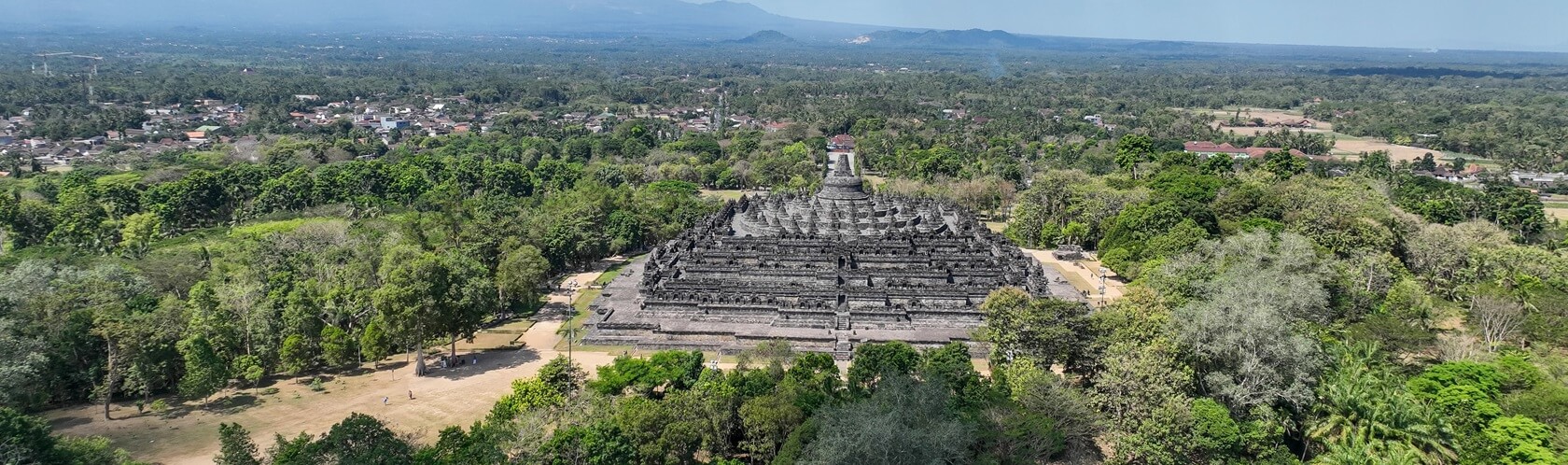
Borobudur is not just a temple, but a huge stone mountain built by humans more than 1,200 years ago on the Indonesian island of Java, long before Gothic cathedrals appeared in Europe. It was built in the 8th-9th centuries by the powerful Shailendra dynasty and for hundreds of years remained abandoned, buried under a layer of volcanic ash and completely swallowed by the jungle. It was only rediscovered in 1814. The Borobudur temple complex is a UNESCO World Heritage Site.
It has the shape of a mandala with 10 levels symbolising the 10 stages of a bodhisattva. It consists of 9 tiers and the main stupa. You begin your journey at the foot and, circling each tier clockwise, climb higher and higher, symbolically purifying your mind.

Depositphotos
This is the lowest, foundation tier of the temple. You enter here after the ticket check. This is the “earthly” level. The walls are covered with 160 stone bas-reliefs that tell about the laws of karma. They show scenes from everyday life: theft, murder, gossip, but also good deeds, such as giving alms.

Depositphotos
This is the “realm of forms”, made up of five square terrace tiers. On the walls, you will see more than 2,600 bas-reliefs with a total length of about 2.5 kilometres! It is a true ancient comic strip, telling stories from the life of Buddha and his previous incarnations (jataka tales). The detail is astonishing - you can see clothing, houses and even the facial expressions of people who lived 1,200 years ago.
And there are also 432 Buddha statues on this level! If you look closely, you will see that the position of Buddha’s hands (mudras) changes depending on the cardinal direction: on the eastern side - one mudra, on the southern side - another, and so on. Each mudra symbolises a particular quality: courage, compassion, wisdom.

Depositphotos
Here, on circular platforms, there are 72 large bell-shaped stone stupas with diamond-shaped openings. Inside each of them, another Buddha statue is hidden. You can look inside and see its silhouette. There is a belief that if you put your hand through the opening and touch the statue, it will bring good luck. In the very centre, at the top of the temple, rises the huge, hermetically sealed main stupa. It symbolises the final goal of the path - Nirvana. The walk from the foot to the summit takes about an hour, including the guide’s explanation.

Depositphotos
The temple is located in Central Java province, 40-45 km north-west of the historic city of Yogyakarta, which is the main tourist base for visiting it. The road from central Yogyakarta takes about an hour and a half.
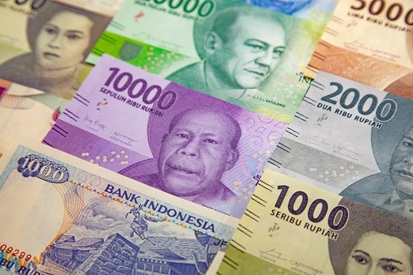
By taxi. Taxi-booking apps work very well in Yogyakarta. Competition is high, so prices are very affordable. A one-way trip from the centre of Yogyakarta to Borobudur by taxi costs around 150,000 - 200,000 Indonesian rupiah, about $10.
By motorbike. Scooter rental in Yogyakarta is very cheap - about 60,000 rupiah per day, which is $3-4. But be ready for chaotic Indonesian traffic.
With a private driver / as part of a tour. You can hire a car with a driver for the whole day or join an organised tour. A private driver costs
500,000 - 700,000 rupiah, around $30, for 8-10 hours. This lets you combine Borobudur with a visit to the equally popular Prambanan Temple, Mount Merapi and other places.
By public bus. This option is for the most budget-conscious and patient travellers. The journey takes 2.5-3 hours and consists of two stages:

Depositphotos
This is the most important and confusing point, which changed after the pandemic. There are now two different types of tickets:
Ground Ticket / Pelataran Candi. This allows you to enter the huge grounds of the archaeological park, walk around the temple, photograph it from a distance and visit the two museums on the site. With this ticket, you cannot climb the temple itself! Price for foreigners: around 400,000 rupiah, about $25.
Monument ticket - Naik Monumen / Structure Ticket. This is the ticket most people need. It includes entry to the park, as well as the right to go up the temple itself and walk along its tiers. But visits to the temple are now strictly regulated. You buy a ticket for a specific time slot, for example from 9:00 to 10:00. The number of people in each slot is limited, around 150. Visits to the upper tiers are only allowed as part of a guided group. The tour lasts about an hour.
Price for foreigners: 455,000 rupiah, about $28-30. The difference in price from the ground ticket is small, so this option is clearly better. The price includes a pair of special “Upanat” sandals, which you must wear to protect the ancient stones of the temple from wear. You will also be given a bag and a bottle of water.

Depositphotos
In the past, the famous sunrise tours allowed visitors to greet the sun right at the top of the stupa. After the pandemic, these rules changed.
The official “Borobudur Sunrise” - the exclusive right to organise sunrise tours on the temple grounds now belongs to the Manohara Resort hotel. This costs about $60. You go up the temple before its official opening.
A cheaper alternative is Punthuk Setumbu Hill. This is a viewpoint on a neighbouring hill, from where, at sunrise, a mystical view opens up: Borobudur wrapped in morning mist, with volcanoes in the background.
You need to arrive before 5 a.m. Entry costs 50,000 rupiah, around $3.

Depositphotos
Do not limit yourself to the temple alone! Authentic Javanese life is in full swing around it.
Do not think of Borobudur as a quick day trip. To truly feel its magic, avoid the crowds and explore the surroundings, it is best to stay for one or two nights in one of the guesthouses or hotels in Borobudur village. This will allow you to see the temple at sunset, welcome the sunrise from Punthuk Setumbu hill and immerse yourself in the unhurried rhythm of Javanese rural life.

Depositphotos