Pamplemousses Botanical Garden in Mauritius: what to see, ticket prices and how to get there
By Viktoria Mudra
21.07.2026
Pamplemousses Botanical Garden, or Sir Seewoosagur Ramgoolam Botanical Garden, is one of the most famous attractions in Mauritius and a place that should definitely be included in your travel route around the island. This is where you can see giant Victoria amazonica water lilies, rare palm species, the historic Mon Plaisir estate, a spice garden and giant land tortoises.
The garden is located just a few kilometres from the capital Port Louis and is considered one of the oldest botanical gardens in the Southern Hemisphere. On an area of about 37 hectares, more than 650 species of tropical plants from all over the world have been collected. Not only botany lovers come here, but also ordinary travellers who want to walk along shaded avenues, see the famous water lilies and get acquainted with the natural heritage of Mauritius.

Depositphotos
Pamplemousses is much more than an ordinary park. Here, the history of the island is closely intertwined with a unique plant collection, many of which cannot be seen in other places in the world.
During a walk through the garden you can:

Depositphotos
The history of the botanical garden begins in 1735, when the French governor Mahe de La Bourdonnais founded his Mon Plaisir estate here. Initially, there was an ordinary vegetable garden on this site, where vegetables were grown for the governor's residence and for ships calling at the port.
Pamplemousses Botanical Garden is interesting not only for its flora. During your walk, it is worth paying attention to the many historical monuments dedicated to people who played an important role in the development of the island and the garden.
The avenues are named after famous historical figures - Pierre Poivre, Mahe de La Bourdonnais, Jean-Nicolas Céré and the French writer Bernardin de Saint-Pierre, the author of the famous novel Paul and Virginie, whose events unfold in Mauritius. In memory of the heroes of the work, a symbolic memorial has been installed in the garden, and it has long become one of the unusual attractions of the park.
During the walk you can also see trees planted by famous statesmen. Among them are an ebony tree planted by Nelson Mandela, a nutmeg tree planted by Francois Mitterrand, a tree planted by Indira Gandhi and other commemorative plantings.
Architectural features of the garden:
One of the architectural jewels of the botanical garden is the colonial estate Château Mon Plaisir. The elegant two-storey mansion was built by the British in 1823 on the site of the former governor's residence.
For many decades, the garden administration was located here, and distinguished guests of the island were also received here. Today, the white mansion with its well-kept park remains one of the most photographed places in Pamplemousses. Nearby stands a monument to the first Prime Minister of Mauritius, Seewoosagur Ramgoolam, after whom the botanical garden is officially named.
Today the garden officially bears the name of the first Prime Minister of independent Mauritius, Seewoosagur Ramgoolam. However, most residents of the island still call it simply Pamplemousses Botanical Garden. Interestingly, the garden got its name thanks to the village of the same name, Pamplemousses. The word itself comes from the French pamplemousse, which is the name of a large citrus fruit resembling grapefruit. These trees appeared here back in the days of the Dutch colonisation of the island and gradually became a kind of symbol of the area.

Depositphotos
One of the most fragrant places in the botanical garden is the famous spice garden, whose history is inseparably linked with Pierre Poivre. It was thanks to his experiments that plants began to be grown in Mauritius that were once considered a true treasure of world trade. During your walk here you can see nutmeg, clove tree, cinnamon, camphor tree and various types of tropical spices.
Nearby there is a medicinal plot where more than 150 species of medicinal plants are collected. Many of them were used by local residents in traditional medicine for centuries.
The garden will appeal not only to plant lovers. In one of its corners there are spacious enclosures where giant land tortoises brought from the Seychelles and from Africa live, as well as Javan deer, which appeared in Mauritius back in the days of Dutch colonisation.
The tortoises spend most of the day resting in the shade of trees, and the deer often come close to the fences, allowing visitors to look at them from very close range.
In addition, on the territory of the garden you can meet many birds, colourful butterflies and small tropical lizards that have long become part of the local ecosystem.
Special attention should be paid to a small open-air exhibition dedicated to the history of the sugar industry in Mauritius. Here a reconstruction of a traditional sugar mill is installed, with the help of which juice was extracted from sugar cane several centuries ago. The mechanism was driven by oxen, and the heavy manual work was performed by slaves. The exhibition is a reminder of the island's colonial past and the development of the sugar industry, which played an important role in the history of Mauritius.
If the pond with giant water lilies is considered the most popular place in the garden, then the white lotus pond is one of its calmest and most romantic corners.
The small crescent-shaped body of water is decorated with blooming white lotuses and surrounded by dense vegetation. It is pleasant to stop here for a while, rest in the shade of the trees, watch water birds and take beautiful photos without large numbers of tourists.
During your walk, make sure to visit the bamboo groves. In strong wind, the tall stems of giant golden bamboo begin to rub against each other, making a characteristic deep creaking sound, and the grove seems to come alive.
No less interesting is the traveller's tree, Ravenala madagascariensis. Despite its outward resemblance to a palm, it belongs to the Strelitziaceae family. The plant got its unusual name because rainwater accumulates in the bases of its large leaves, so in the past travellers could use this water to quench their thirst.
Another unusual object in the garden is the so-called "bleeding tree" of the genus Pterocarpus. If its bark or a dry branch is slightly damaged, it begins to release a thick dark red sap that resembles blood. Many local legends are connected with this unusual natural phenomenon, and guides tell these stories during excursions.
The garden became truly famous a few decades later thanks to the French botanist and intendant of the island, Pierre Poivre. In the 1770s he decided to turn an ordinary vegetable garden into a large experimental botanical garden. It was Poivre who began secretly bringing seedlings of nutmeg, cloves, cinnamon and other valuable spices to the island. At that time, their cultivation was almost completely monopolised by the Dutch, so such experiments had not only scientific but also economic importance. Over time, the garden collection expanded significantly thanks to the work of other botanists.

Depositphotos
The main value of the garden is its extremely rich collection of tropical plants. Today more than 650 species grow here, brought from almost all continents. A particular pride of Pamplemousses is one of the largest palm collections in the world, about 90 species.
During a walk you can see:
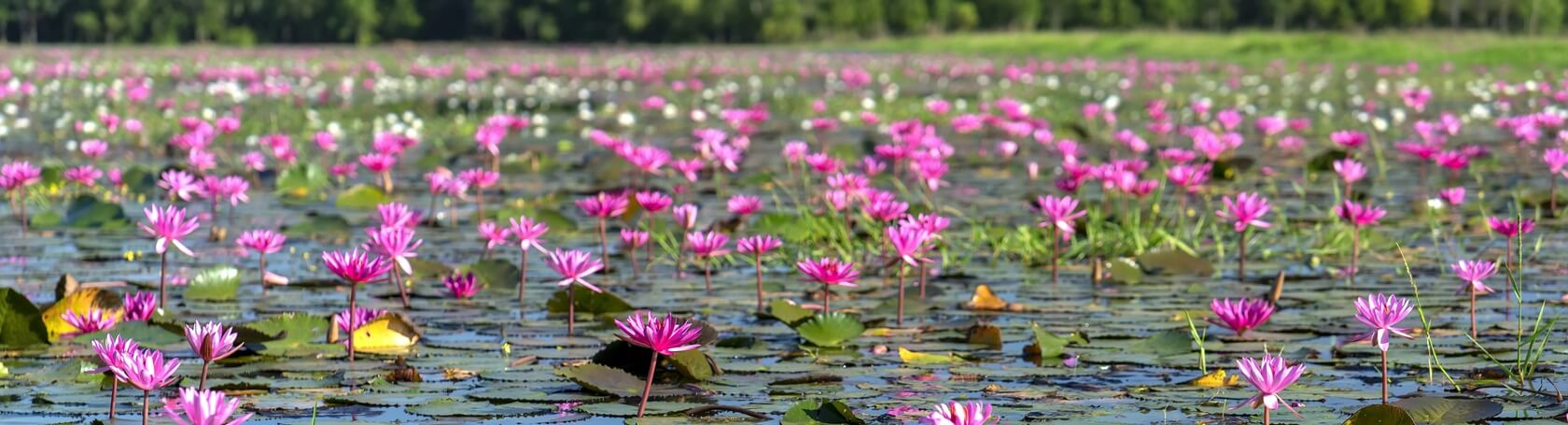
The most popular place in the botanical garden is the picturesque pond with giant Victoria amazonica water lilies. It is here that tourists take most of their photographs.
These amazing plants were brought from South America. Their round leaves with high curved edges reach almost two metres in diameter and resemble huge green trays. During flowering the water lilies are especially beautiful: first the flowers open white, and after some time they acquire a delicate pink shade.
The best time to visit the pond is from November to April.

Depositphotos
Pamplemousses Botanical Garden is open to visitors every day, including weekends and public holidays. Opening hours: daily from 08:30 to 17:30.
Ticket price: for adult foreign tourists - 300 Mauritian rupees (MUR); children under 5 years old - free.
If you plan professional photo or video shooting, you will need to arrange an additional permit. For small groups, the cost is about 2500 MUR.
Licensed local guides work at the main entrance. Their services are paid separately. A guided tour is not mandatory, but guides help you find the rarest plants, tell the history of the garden, explain the origin of unusual trees and share interesting facts.

Depositphotos
The botanical garden is located in the village of Pamplemousses in the north-west of Mauritius.
The distance to the main tourist areas of the island is quite short. You can get to the garden by rented car, by taxi or by public bus travelling from Port Louis in the northern direction. There is a spacious parking area near the main entrance.
2 to 3 hours are usually enough to get acquainted with the main alleys, the pond with giant water lilies and the enclosures with animals. The best time to visit is right after opening or in the second half of the day, after 15:00. At these times it is not so hot, and there are significantly fewer organised tourist groups.
Near the main entrance there are small cafes and food trucks where you can buy soft drinks, fresh coconuts, pineapples and local dishes.

Depositphotos
A visit to the garden is easy to combine with other interesting attractions in the northern part of Mauritius.
L'Aventure du Sucre Museum. Just a few minutes away is one of the best museums on the island, L'Aventure du Sucre. It is located in the building of a former sugar factory and tells the story of Mauritius through the development of the sugar industry.
The village of Pamplemousses. Here cosy Creole houses, a calm provincial atmosphere and one of the island's well-known historic churches have been preserved, the Church of Saint Francis of Assisi, built from dark volcanic stone.
Port Louis. Just 15 to 20 minutes away is the capital of Mauritius, Port Louis. A trip to the botanical garden can easily be combined with a walk along the Caudan waterfront, a visit to the Central Market, Fort Adelaide and other attractions of the city.

Depositphotos