Where is Mauritius: the country's geography and map
By Viktoria Mudra
24.03.2026
«God first created Mauritius, and then heaven in its image», Mark Twain supposedly said, according to legend. And when you look at the island's unique nature, it becomes clear why. Mauritius is not just a dot on the map, but a country of tropical wonders lost in the Indian Ocean.

Depositphotos
Imagine a globe. Find Africa and trace east from its south-eastern coast. The first large island on your way will be Madagascar. And even farther east, about 650 kilometres away, you will find the Mascarene Archipelago - a group of volcanic islands scattered in the middle of vast waters. Mauritius is the brightest and largest pearl in this necklace.
Mauritius is an island nation in the Indian Ocean, geographically and culturally linked to Africa. The distance to the African continent is about 2,000 kilometres. This remoteness from the mainland played a key role in the island's unique flora and fauna.
The Republic of Mauritius consists of the main island, as well as Rodrigues Island, the Cargados Carajos archipelago, Agalega Island and many smaller islets.
Mauritius, where travellers fly for their holidays, lies at about 20° south latitude and 57° east longitude. This matters because it is located just north of the Tropic of Capricorn, which gives it an ideal tropical climate without exhausting equatorial heat.

Depositphotos
Time zone: MUT, UTC+4. The time is exactly the same as in Dubai. The difference is +4 hours with London in winter and +3 hours in summer, +3 hours with Paris in winter and +2 hours in summer, +2 hours with Kyiv in winter and +1 hour in summer, and +9 hours with Washington in winter and +8 hours in summer.
Nearby islands include Madagascar, the Seychelles and the Maldives.
The island is surrounded by amazing tiny islets such as Ile aux Cerfs, Ile Ronde, Coin de Mire, Ile Plate, Ile aux Bénitiers and Ile aux Gabriel.

Depositphotos

Depositphotos
Mauritius is a volcanic island, and this heritage can be seen in every landscape. It is quite young (formed 7-10 million years ago) and relatively small - 65 km long and 45 km wide - so you can drive around it in a single day.
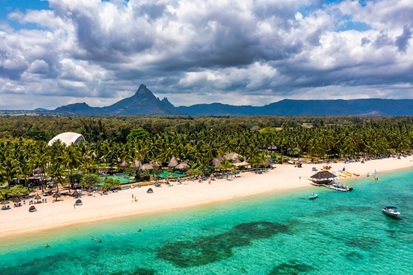
The landscape is very diverse. It is not a flat atoll like the Maldives, for example. The island's backbone is a central plateau rising 300-400 metres above sea level. This is where major towns such as Curepipe are located, and where the climate is cooler and wetter. The plateau is framed by scenic mountain ranges - the remains of a giant volcano that once formed Mauritius. The mountains are not very high, but they are strikingly beautiful and have unusual shapes, such as Le Morne Brabant or Pieter Both. The highest point is Piton de la Petite Rivière Noire (828 metres).
Among the best places and attractions in Mauritius are the Seven Coloured Earth in Chamarel, Black River Gorges National Park, Pamplemousses Botanical Garden, Le Morne Brabant mountain, Rochester Falls and many other natural wonders.
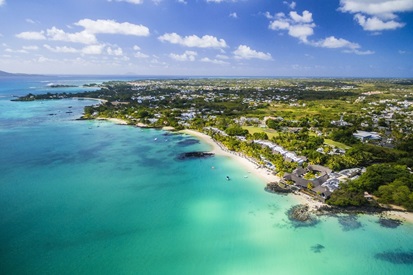
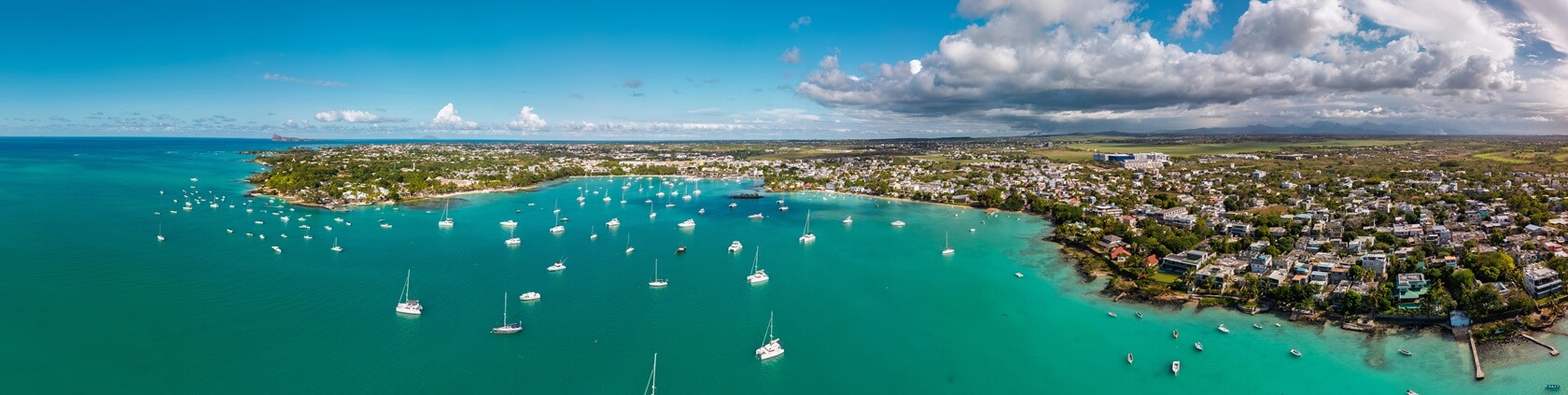
The total length of the coastline is about 330 km. Almost the entire island, except for a small stretch in the south, is surrounded by one of the world's largest barrier coral reefs. This natural breakwater protects the coast from strong ocean waves and creates calm, crystal-clear turquoise lagoons. Thanks to the reef, conditions here are ideal for swimming, snorkelling and kayaking. Mauritius beaches are known for their incredible beauty.

Depositphotos
Mauritius is part of the Mascarene Archipelago group, and each island in it is unique in its own way.
It lies 200 km south-west of Mauritius. It is an overseas department of France and part of the European Union, the "older brother" of Mauritius - younger in geological terms, wilder and more mountainous. It is home to two active volcanoes, including Piton de la Fournaise, one of the most active in the world. Réunion is a paradise for hiking, trekking and extreme sports. It has almost none of the beaches and lagoons Mauritius is famous for, but instead offers lunar landscapes, volcanic calderas and thousands of waterfalls.
There are excellent air connections between Mauritius and Réunion (the flight takes less than an hour), and many tourists combine a relaxing beach holiday in Mauritius with active adventures in Réunion.

Depositphotos
This remote and mysterious island lies 560 km east of Mauritius.
It is an autonomous part of the Republic. Rodrigues is often called "Mauritius 50 years ago". It is a small, very authentic and peaceful island, almost untouched by mass tourism. Life here moves slowly and calmly. Rodrigues is known for its huge lagoon, which is twice the size of the island itself. It is ideal for kitesurfing and diving. There are also unique caves and nature reserves where giant tortoise populations are being restored.
Other islands of the Republic of Mauritius:
Disputed territories:
Mauritius also claims sovereignty over the Chagos Archipelago (currently British territory) and Tromelin Island (administered by France).

Image by ricardostephan via Pixabay
The island is divided into 9 administrative districts, each with its own character:

Depositphotos
Mauritius is fairly well connected with different parts of the world. Direct flights to Sir Seewoosagur Ramgoolam International Airport (MRU) operate from many major cities:
Thanks to its convenient location, Mauritius has become an ideal place where travellers from all over the world meet to enjoy the tropics and a mix of cultures.

Depositphotos