Interesting facts about Java: what surprises the main island of Indonesia
By Viktoria Mudra
10.05.2026
Java - the heart of Indonesia, an island of ancient civilizations, active volcanoes, unique culture and natural records. The largest temples in Southeast Asia are located here, some of the rarest animals on the planet live here, and many of the phenomena that can be seen on Java have no equivalents in the world. We have collected the most amazing facts about this island that will help you look at Java not only as a tourist destination, but also as one of the most unusual places on Earth.

Depositphotos
Java is considered the most densely populated island in the world: more than half of Indonesia's population lives here. With a relatively compact area, the island is home to over 150 million people - more than in many large countries. This is where the country's largest cities are concentrated, including Jakarta, Surabaya and Yogyakarta. At the same time, Java amazingly combines megacities, rice terraces, ancient villages and volcanic landscapes, creating a rare contrast between urbanization and traditional life.

Depositphotos
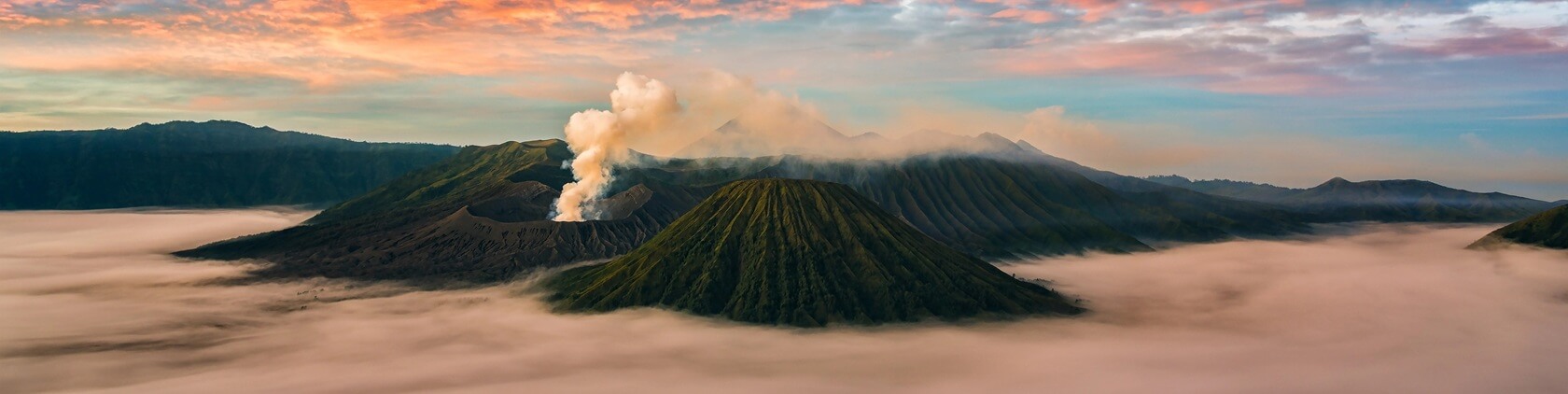
Java lies within the Pacific Ring of Fire - the largest zone of volcanic activity on the planet. There are more than a hundred volcanoes on the island, many of them active. It is they that shaped Java's green landscapes, fertile soils and famous mountain panoramas. Among the most famous are Bromo, Semeru and Merapi. Volcanoes here are not only natural symbols of the island, but also part of the everyday life of local residents living next to one of the most powerful forces on Earth.

Depositphotos
Mount Merapi in Central Java is considered one of the most active volcanoes on the planet. Its name translates as "mountain of fire", and it is fully justified: eruptions happen regularly. Despite the danger, people have lived for centuries on the slopes of the volcano, and the local culture is closely connected with reverence for the mountain. Merapi is surrounded by legends, and its landscapes attract travelers, photographers and trekkers. Few places in the world allow you to see such close coexistence between people and an active volcano.

Depositphotos
The Ijen volcano in eastern Java is famous for the unique natural phenomenon of Blue Fire - blue flames that appear when sulfuric gases ignite. This is one of the rarest phenomena in the world, and it is especially impressive at night. In addition, the crater contains a turquoise acidic lake - one of the most unusual on the planet. Ijen is also known for the hard work of sulfur porters, who carry sulfur by hand. The combination of harsh nature and a rare phenomenon makes this place one of the most amazing on Java.

Depositphotos
Borobudur - the largest Buddhist temple on the planet and one of the greatest structures of the ancient world. This 9th-century monument consists of millions of stone blocks and is decorated with thousands of reliefs and hundreds of Buddha statues. The complex was built as a symbolic image of the path to enlightenment. At sunrise, Borobudur looks especially impressive when the stupas rise out of the mist against the background of volcanoes. It is not only a UNESCO monument, but also one of the main cultural symbols of all Indonesia.

Depositphotos
Not far from Borobudur is Prambanan - the largest Hindu temple complex in Indonesia. It is often called the temple of a thousand legends because of the story of Princess Loro Jonggrang, connected with the construction of a thousand temples in one night. The high towers of Prambanan are dedicated to the Hindu trinity - Shiva, Brahma and Vishnu. The combination of architecture, mythology and ancient symbolism is especially impressive. This complex is considered one of the most beautiful temple ensembles in Southeast Asia.

Depositphotos
Few people know that the word Java has long become a synonym for coffee in the English language. This is a legacy of the colonial era, when Javanese coffee was exported all over the world and was considered a benchmark of quality. Coffee is still grown on the island today on volcanic slopes, where fertile soils create special flavor profiles. Java's coffee plantations are part of the history of global trade, and the expression "a cup of java" still reminds people of the island's role in world coffee culture.

Depositphotos
One of the most important discoveries in world anthropology is connected specifically with Java. It was here that the remains of Homo erectus, known as "Java Man", were found. These discoveries became key evidence of the early evolution of humankind. The discovery made the island famous far beyond Indonesia and turned it into an important point in world science. Few tourists know that Java is interesting not only for its temples and volcanoes, but also because it preserves traces of the ancient history of humankind.
The Javan rhinoceros is one of the rarest large mammals on Earth. Today it survives only in Ujung Kulon National Park at the western tip of Java. The population is extremely small, making the animal a symbol of the global struggle for nature conservation. The very fact that the last wild range of this species is located specifically on Java makes the island unique not only culturally, but also from the point of view of biodiversity.

Depositphotos
Java is considered the cradle of Indonesian batik and the traditional shadow theater wayang kulit, both included in the UNESCO list of intangible heritage. Batik here is not just a craft, but a whole cultural code where patterns carry symbolic meaning. Shadow theater, accompanied by gamelan music, preserves epic plots and ancient myths. These traditions make Java one of the most important cultural centers of Asia.

Depositphotos
Java is known not only for volcanoes, but also for impressive waterfalls. Tumpak Sewu is often called one of the most beautiful waterfalls in Southeast Asia thanks to its amphitheater of dozens of cascades. Madakaripura, hidden among gorges, is wrapped in legends and is considered one of the most picturesque on the island.
Java is much more than simply the main island of Indonesia. It is a place where ancient history, untouched nature and unique culture come together in one of the most unusual destinations in Asia.

Depositphotos