Religions and Holidays of Bali
By Viktoria Mudra
29.01.2026
They celebrate the New Year in March and drive away evil spirits with giant papier-mâché monsters: the beliefs and traditions of the Balinese people.
Bali is the only corner of Indonesia where Hinduism is so prevalent—over 80%. Although the majority of Indonesians are Muslim, the country recognizes several official religions (including Islam, Balinese Hinduism, Catholicism, Protestantism, Buddhism, and Confucianism). All are accorded equal respect under the country's laws.
In Bali, almost every day is marked on the local calendar, as the island is a melting pot of Hindu, Muslim, Christian, Buddhist, and international holidays. The most unusual for tourists are the Hindu holidays, which are celebrated with great fanfare.

Depositphotos
Hindus believe in the existence of various deities, spirits, and forces of good and evil. Ceremonial days are dedicated to appeasing and honoring divine beings. These rituals are quite unusual for visitors from other countries. They include prayers, chants, dances, processions, and offerings to deities and ancestors.
The island uses two calendars, with over 100 ceremonial days in a 210-day cycle!
Some features :

Depositphotos
Some of the most famous among tourists:
Nyepi is the Balinese New Year, celebrated on the island in a very unusual way! Devout Balinese celebrate in almost complete silence, earning the holiday the name "Day of Silence."
The Nyepi celebration begins with a series of rituals and events leading up to the main day. One of the most important rituals is the Melasti ceremony: sacred objects, images of gods, and deified ancestors are brought to holy springs or the sea for symbolic purification. This is followed by the Bhuta Yajna ceremony, during which loud sounds, flames, and chaos are created to ward off evil spirits.
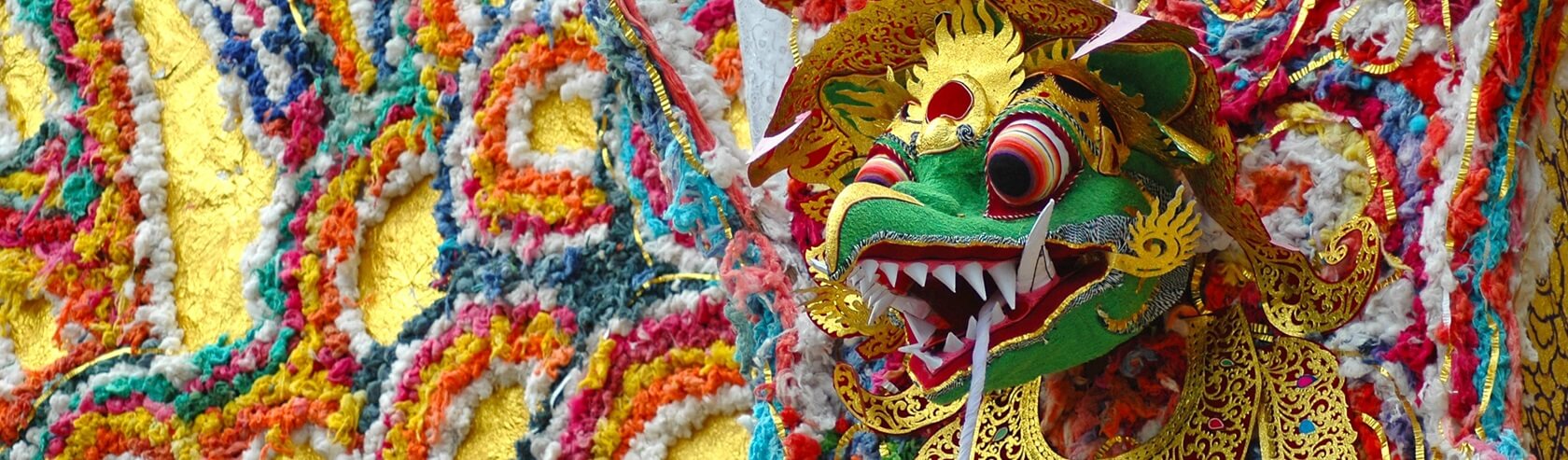
At sunset before Nyepi, Balinese gather at the main crossroads of their villages for a riotous celebration. They carry giant papier-mâché effigies of the "Ogo-Ogo" monsters.
On Nyepi Day itself, the entire island of Bali comes to a standstill. Many Balinese spend the day in prayer, meditation, and reading religious texts. They stay home and abstain from any form of entertainment, work, or travel. On Nyepi Day, the streets are empty, and all businesses, including the airport and seaports, are closed. Only pekalangs, traditional guards who enforce the rules of Nyepi, are allowed to move about. Electricity and lighting are kept to a minimum, and noise is discouraged. This is intended to create an atmosphere of peace and tranquility, as well as to deceive evil spirits into believing the island is uninhabited and there is nothing to do there.

Depositphotos
The day after Nyepi is Ngembak Geni. Balinese people meet to ask each other for forgiveness. One of the important rituals of Ngembak Geni is Omed-Omedan, a kissing ritual held in the village of Sesetan in Denpasar. Young men and women gather in the streets and engage in a playful water fight. The men chase the women and try to kiss them, while the women try to avoid being kissed. This ritual is believed to bring good luck and prosperity to the village.
Ubud, Bali's cultural capital, hosts a spectacular week-long Spirit Festival. Numerous venues throughout the city host a variety of events, from yoga workshops to dance performances and healing practices. Yoga enthusiasts can try their hand at such styles as Vinyasa, Ashtanga, and Kundalini. Visitors are introduced to Balinese culture through dance. Every evening, there are concerts by musicians from around the world.

Depositphotos
According to Balinese belief, children born on Tumpek Wayang are cursed by the god of the underworld. However, they can be purified through a ritual—a performance using wayang puppets. These wooden puppets symbolize characters from Balinese mythology. Wayang puppets are made from buffalo hide, painted, and attached to bamboo rods. On the day of the festival, the figurines are displayed in temples for blessing by priests.

Depositphotos
Galungan is a ten-day festival during which, according to Balinese belief, the souls of ancestors return to the world of the living. People greet them joyfully, holding ceremonies in temples and homes. The main ritual is Ngelawang, when residents dress as mythical creatures called barong and visit every house, bringing harmony and banishing evil. During this time, residents honor the One God Above All (Ida Sang Hyang Widi Wasa), also known as the Incomprehensible (Asinthya). The streets of Balinese villages are decorated with "penjors," bamboo pole decorations with woven palm branches, flowers, colorful ribbons, and fabric. Incidentally, during this holiday, trade almost ceases, and schools are closed.

Depositphotos
Kuningan is a Hindu festival marking the end of Galungan. It is celebrated ten days after Galungan with offerings, prayers, and cultural events. This festival symbolizes the return of ancestral spirits to heaven and the renewal of cosmic balance. On Galungan, ancestors are believed to offer blessings and protection to their living descendants.
Nasi kuning, or yellow rice, is a tasty feature of the Kuningan ceremony.
Each family cooks using its own traditional recipes. The color yellow is significant, symbolizing prosperity and spiritual enlightenment. Offerings also include fruits, cakes, and symbolic objects.
The festival falls on Saniskara (Saturday) of the 12th week of the Balinese calendar.
The day after Kuningan is Manis Kuningan, a time of celebration, visiting and fun.

Depositphotos
Also known as the full moon, Purnama holds great significance in Balinese culture and religious rites. It is considered a sacred time when the moon is at its most powerful and auspicious. Purnama is celebrated every month. The Balinese believe that during Purnama, the gods descend to Earth to bestow their blessings on devotees. It is a time of traditional dance, music, and theatrical performances.

Depositphotos
The Kajeng Kliwon ceremony is held every 15 days in Bali, so there is a good chance you will witness it during your stay.
It is believed to be a time when the physical and spiritual worlds are in balance, and good and evil are of equal power. During Kajeng Kliwon, Balinese make special offerings to ward off spirits. Women can often be seen placing offerings on the ground outside their home gates. Many festivals commemorating temple anniversaries and other religious ceremonies are held during Kajeng Kliwon. This is the time when dance masks and wayang kulit shadow puppets appear.

Depositphotos
This is a Bali ceremony held on the new moon, designed to ward off evil spirits that gather in the darkness. On the night of Tilem, known as Siva Latri, people typically remain awake and meditate on Shiva. The nightly meditation ceremony is held at Pura Jagat Natha, a large temple in Denpasar. Balinese may participate in traditional dances, musical performances, and other artistic expressions to celebrate Tilem.
Tumpek Landep, or "Metal Day," is a time to make offerings to all metal, including cars, military weapons, and especially sacred short swords (kris). If a family owns such weapons, they are unsheathed in the family shrine on Tumpek Landep, sprinkled with holy water, and accompanied by offerings of woven coconut leaves, flowers, and fruit, burning incense and sandalwood, and offering prayers.
Nowadays, motorcycles, trucks, and cars are the main attractions at Tumpek Landepe. Braided coconut leaves hang from the grilles and mirrors of motorcycles, and the cars are sprinkled with holy water and rice grains. Ceremonial cloths are wrapped around the seats. The hoods of cars, trucks, and buses are always trimmed with fabric, batik, or brocade to resemble the kambens worn on ceremonial occasions. A woven lamak ceremonial mat is hung from the radiator grille. And special baskets for offerings are placed on the dashboard.

Depositphotos
Some traditional celebrations in Balinese villages are of particular interest to tourists.
The annual Sanur Village Festival lasts for five days. It's a veritable carnival with traditional gamelan music, colorful kite flying, beach soccer, and wayang kulit shadow theater performances. The most recent festival attracted over 20,000 guests!
The program includes sports competitions—cycling, swimming, running, and canoeing—as part of the Sanur Quadrathlon. An amateur golf tournament is also held at the Bali Beach course.

Depositphotos
A special day when locals fly kites with colorful designs of animals, boats, and dragons from Padang Galak Beach is a truly magical sight!

Depositphotos
Ubud Culinary Festival, local and international chefs share the rich traditions of Indonesian cuisine. Gourmets attend master classes, learn Balinese recipes, and discover the secrets of Peranakan cuisine and slow food.

Depositphotos
At the arts festival, you can see traditional performances and contemporary theater, visit exhibitions of Balinese and fusion cuisine, view paintings, documentaries, and shadow puppet shows. The set and lineup change daily!

Depositphotos