Mauritius: history, culture and fascinating facts
By Viktoria Mudra
12.05.2026
A remote tropical land where the untouched nature of the ocean intertwined with a special culture created by the colonial past. Mauritius has a certain Creole charm that is worth feeling. What interesting things can you learn about this island country to make you want to see it even more? We will tell you everything in more detail.

Depositphotos
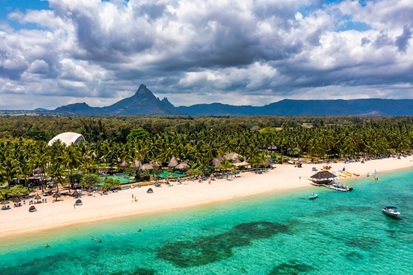
This piece of land in the middle of the ocean is entirely of volcanic origin. The island was formed about 7-10 million years ago as a result of powerful underwater eruptions. Compared to its neighbor, Reunion Island, Mauritius is much older. Its volcanoes have long been asleep - the last activity, according to scientists, happened more than 10 thousand years ago. Erosion turned the sharp peaks into the bizarre mountains we see today.

Depositphotos
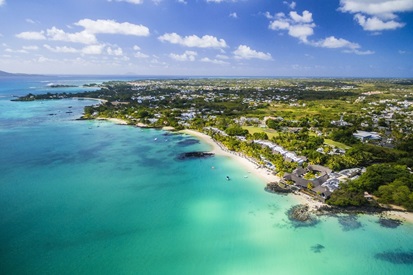
The island is surrounded by the third largest coral reef in the world, which, like a fortress wall, protects the shores from ocean waves and sharks. It is to this reef that the island owes its perfect lagoons. However, in the south the reef is interrupted, and there the ocean shows all its power, visible in the rocks carved by waves over centuries, such as La Roche qui Pleure, or the Weeping Rock.

Depositphotos
Mauritius long remained a "terra incognita". Arab sailors discovered it as early as the 10th century, but, having found nothing valuable here, for example gold, simply marked it on maps under the name Dina Arobi. For them it was only a beacon in the middle of emptiness. The Portuguese, who arrived in the 16th century, also did not stay, leaving only the name Ilha do Cirne (Island of the Swan). Real colonization began with the Dutch. In 1598, a squadron under the command of Admiral Wybrand van Warwyck landed in the southeast. The island was named Mauritius in honor of the Dutch military leader, Prince Maurice of Nassau.
The Dutch brought sugar cane to the island, which in the future became the basis of the economy. Unfortunately, this period became fatal for the symbol of Mauritius - the Dodo bird, or the Mauritian dodo. The flightless bird, which knew no predators, became easy prey for sailors, as well as for rats and pigs brought on ships. By 1681, the Dodo disappeared forever. Over time, the Dutch also left the island, escaping endless cyclones and invasions of pests.
.jpg)
Depositphotos
The French colonizers turned out to be more persistent. The island was renamed Ile-de-France. Colonial governor Louis Charles Mahe de La Bourdonnais turned it into a civilized land. During that period, Port Louis was built, shipyards were created, roads were laid and mansions were erected, for example Chateau de Labourdonnais, which can still be seen today. Slaves were brought from East Africa and Madagascar, and it was during this period that the Creole language began to form.

Depositphotos
In 1810 Mauritius was captured by the British, who were primarily interested in its strategic location. This happened after the famous Battle of Grand Port - the only naval battle won by the French, however this did not change the course of the struggle for control of the island.
The British returned the former name "Mauritius" and in 1835 made the historic decision to abolish slavery. To save the sugar plantations, indentured workers from India and China arrived on the island. In Port Louis, Aapravasi Ghat was built - an immigration terminal through which half a million people passed. It is now a UNESCO historical site.
In 1968 Mauritius became independent. Sir Seewoosagur Ramgoolam, whom they considered the Father of the Nation, managed to unite Indians, Creoles, Chinese and Europeans into one people. In 1992 the country became a Republic. Today it is one of the most economically stable countries in Africa.

Depositphotos
Historically, many cultures and peoples mixed on the island, which is why Mauritius appears as a unique state. Its constitution does not have a single official language.
If you address a Mauritian with "Bonzour, ki maniere?" (Hello, how are you?), you will instantly win him over.
In the course of one day in Mauritius, you can hear church bells, the muezzin's call to prayer and see incense smoke in a Hindu temple.
About 48% of the population are Hindus. Their spiritual heart is Ganga Talao (Grand Bassin). This is a sacred lake in the crater of a volcano. Mauritians believe that it is connected by underground veins with the great Ganges. In February, for the Maha Shivaratri festival, 400 thousand people in white clothes walk here from all corners of the island, carrying homemade altars "kanwars" on their shoulders. This is one of the largest and most peaceful pilgrimages in the world: a 32-kilometer procession!

Depositphotos
The cuisine of Mauritius - is a separate reason to travel to the island. Here are several reasons:

Depositphotos
What is there on the island that exists nowhere else in the world.
Here they learned to process bagasse from sugar cane. It is burned at special thermal power plants. During the harvest period, up to 15-20% of all the island's electricity is produced from sugar!

Depositphotos
In the south of the country, sugar cane is still processed into craft rum, using time-tested methods. The Chamarel distillery, founded in 2008, still uses distillation equipment a hundred years old. You can wave a machete on the plantation and try 12 different kinds of unrefined sugar produced locally.

Depositphotos
Off the coast of the Le Morne Brabant peninsula there is a visual phenomenon that deceived millions of people on Google Maps. It seems that a giant waterfall is falling right into the ocean. In reality, it is the movement of sand and silt that are drawn by currents into a deep depression. You can see this only from the air. Tourists are offered helicopter or seaplane excursions to the Underwater Waterfall.

Depositphotos
In the village of Chamarel there are dunes that are not washed away by rain and do not mix from the wind. Seven colors - from purple to red. This natural phenomenon appeared because volcanic ash cooled at different temperatures and oxidized differently. If you take a handful of this sand and mix it, after some time it will separate again into colored layers. Simply geological magic!

Depositphotos
An exact copy of the Dodo bird can be seen in the Natural History Museum in Port Louis. It was recreated from a skeleton. This is a real emblem of the island. The Dodo appears on all kinds of souvenirs, and there is even a football team named in its honor. At the same time, no one has seen the Dodo in the wild since the 1680s.

Depositphotos
Portuguese navigators called Mauritius "Stella Clavisque Maris Indici" - "The Star and Key" of the Indian Ocean, emphasizing its strategic position on sea routes. Whoever owned Mauritius controlled the entire trade route from Europe to India and China.

Depositphotos
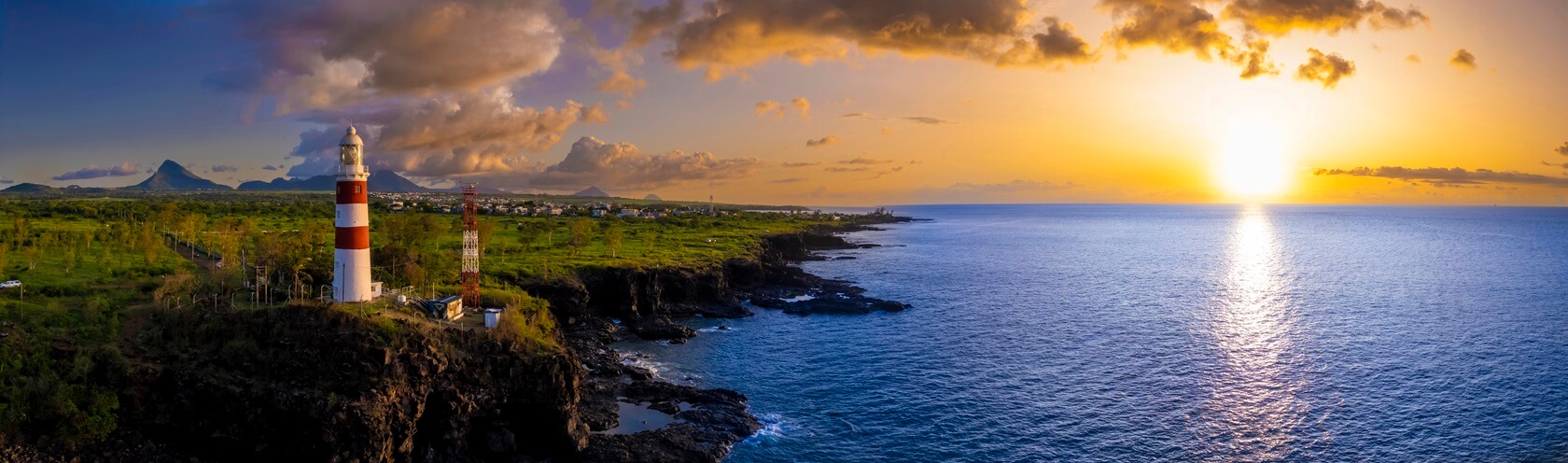
The 30-meter-high lighthouse, built in 1910, still performs its function to this day. This is one of the most interesting photo objects on the island, located on a steep rocky shore on the west coast of Mauritius.

Depositphotos
A historic mountain that is a UNESCO site, as a symbol of resistance and freedom. In the 18th century it was home to "maroons" - runaway slaves who created entire settlements in the jungle on the summit.

Depositphotos
The Blue Penny Museum in Port Louis keeps the main relics of philately - stamps from 1847. The wife of the governor of Mauritius held a ball and printed stamps for invitations. By mistake, the engraver printed "Post Office" instead of "Post Paid". Today these misprints are estimated at 8-10 million dollars and are a national pride.

J.O.Barnard, Public domain, via Wikimedia Commons
Another hallmark of Mauritius - the famous Pamplemousses Garden, where more than 600 species of exotic plants from all five continents grow. Here you can also see giant Victoria Amazonica water lilies that change color. Their leaves can hold a weight of up to 45-50 kg, if it is distributed evenly.

Depositphotos
The dance included in the UNESCO list - is the soul of the island. Sega was born as a cry of pain of African slaves, which over time turned into a hymn of joy and freedom. The dance is distinguished by movements of the hips and legs, but at the same time the dancers' feet hardly leave the floor - a kind of imitation of dancing on sand.
Mauritius offers many curious surprises. There is everything here at once - from colonial history and wild volcanic nature to luxury resorts of world class.